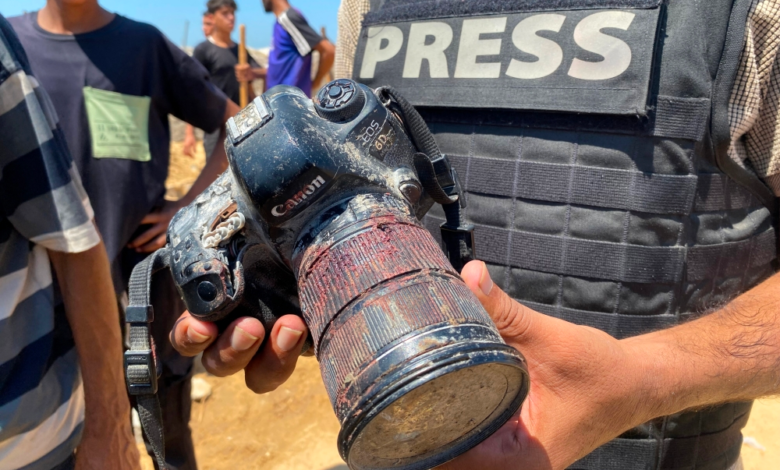
128 journalists killed in 2025: International Federation of Journalists report

The International Federation of Journalists, in its annual report released today, revealed alarming statistics regarding the safety of journalistic work around the world, documenting the killing of 128 journalists and media workers during 2025. These figures are a dangerous indicator of the escalating violence directed against the press, which poses unprecedented challenges to freedom of expression and the right to access information.
The report explained that the Middle East remains the most dangerous region for journalists, accounting for more than half of all recorded deaths worldwide. The Federation expressed particular concern about the catastrophic situation in the Palestinian territories, where 56 journalists were killed. This figure reflects the continued high risks faced by journalists in conflict zones, who often become direct targets or victims of indiscriminate bombing, hindering the reporting of truth and the documentation of human suffering.
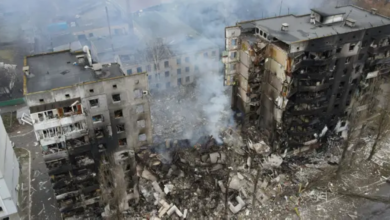
The loss of life among journalists was not limited to the Middle East; it extended to other regions experiencing geopolitical tensions, armed conflicts, or internal unrest. The report documented the killing of journalists in Yemen, Sudan (which is suffering from ongoing internal conflicts), and Ukraine (which is still embroiled in war), as well as incidents in Peru and India. This geographical distribution indicates that the danger is not confined to traditional battlefronts but also affects journalists investigating corruption and organized crime in relatively stable countries.
In a related context, the International Federation of Journalists (IFJ) highlighted another facet of repression: arrest and imprisonment. The IFJ expressed grave concern over the 533 journalists currently imprisoned in various jails around the world. This figure serves as stark evidence of the use of restrictive laws as a tool to silence critical voices and prevent the exposure of truth, constituting a blatant violation of international conventions guaranteeing press freedom.
These figures have profound implications that go beyond mere statistics; they reflect an erosion of the international protection system for journalists. Historically, targeting journalists has been considered a war crime under international humanitarian law, yet the continuation of these violations without holding perpetrators accountable reinforces a culture of impunity. The forced absence of journalists from the scene, whether through killing or arrest, leads to the silencing of impartial witnesses, facilitating the perpetration of further crimes away from the world's gaze and depriving societies of their fundamental right to know and to hold those responsible to account.