Israeli recognition of Somaliland: Does it serve the interests of Al-Shabaab?

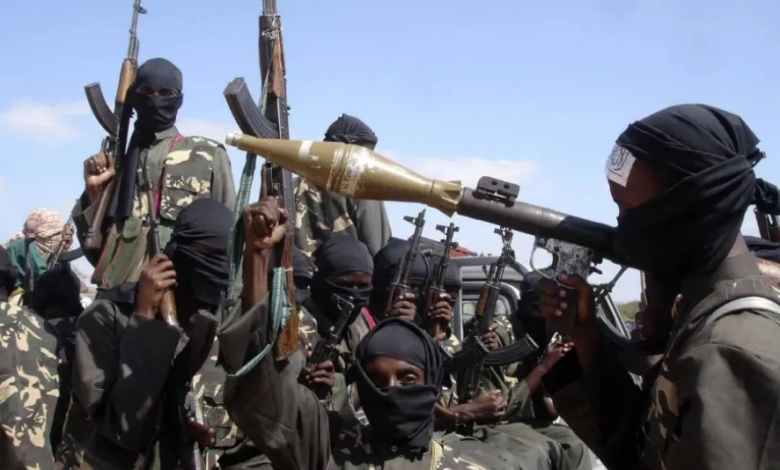
The growing talk of a potential Israeli recognition of the self-declared Republic of Somaliland is raising deep security and political concerns in the Horn of Africa. This development, if confirmed or formalized, would not only impact diplomatic relations but also touch a sensitive security nerve in the region, namely the extremist group al-Shabaab, which could find in this rapprochement an ideal pretext to expand its operations and recruit more fighters under religious and political banners.
Geopolitical context and historical background
Since declaring its independence from Somalia in 1991, Somaliland has strived to gain international recognition to legitimize its autonomy, enjoying relative stability compared to southern Somalia. In this pursuit, it has demonstrated a willingness to forge alliances with various regional and international powers. For its part, Israel consistently seeks to bolster its influence in the Red Sea and Horn of Africa region for security and strategic purposes related to securing waterways and containing Iranian influence in the region. This convergence of interests, while sensitive, represents a turning point that could redraw the map of alliances, but it clashes with the complex reality imposed by the federal government in Mogadishu, which rejects any infringement on its sovereignty over Somali territory.
The youth movement and the exploitation of the new narrative
The al-Qaeda-linked al-Shabaab movement bases its propaganda on a narrative of “resisting invaders” and “defending the faith.” Israel’s involvement in the Somaliland crisis would provide the movement with an invaluable propaganda gift. Al-Shabaab has long used anti-Zionist rhetoric as a mobilization tool; therefore, any official or semi-official Israeli presence in Hargeisa would be interpreted by the movement as an “invasion” warranting jihad, potentially transforming Somaliland—which has been relatively spared from the movement’s violent attacks—into a major new battleground.
Is Hargeisa cooperating with Mogadishu?
This complex situation raises a fundamental question about the possibility of cooperation between the Somaliland government and the federal government in Mogadishu to confront the common threat. Logically, the escalating threat of al-Shabaab necessitates security and intelligence coordination between the two sides. However, the political obstacles appear formidable. Mogadishu views with suspicion any external moves by Hargeisa that promote its secession, while Hargeisa sees cooperation with Mogadishu without political recognition as a form of concession. Nevertheless, the realities on the ground and the danger of terrorist expansion may necessitate a kind of undeclared "necessary cooperation" to prevent the entire region from descending into security chaos that would only benefit extremist groups.
Regional and international impact
The repercussions of this issue extend far beyond Somalia's borders, encompassing neighboring countries such as Ethiopia and Djibouti, as well as those bordering the Red Sea. The destabilization of Somaliland through potential attacks by al-Shabaab would threaten maritime security in the Bab el-Mandeb Strait and create a new flashpoint in an already fragile region. Therefore, the international community is closely monitoring these developments, recognizing that any miscalculation could ignite a widespread security crisis that would be difficult to contain.