The International Space Station passed over Jeddah at dawn on Friday – observation details

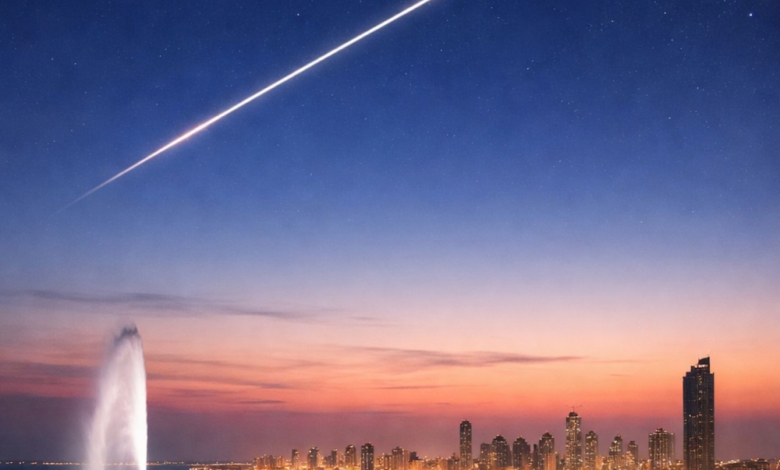
Astronomy enthusiasts and those interested in natural phenomena in Saudi Arabia, particularly in the city of Jeddah, will turn their gaze to the sky at dawn on Friday, March 6th, to witness a remarkable astronomical event: the passage of the International Space Station (ISS) in a spectacle visible to the naked eye. This transit presents an ideal opportunity for those interested in space science and astrophotography to observe the largest man-made object orbiting Earth shining like a luminous jewel against the darkness of dawn.
Details of the crossing and monitoring time
Engineer Majed Abu Zahra, head of the Jeddah Astronomical Society, stated that the city's residents are in for an exceptional transit, which will begin at 5:48 AM. The celestial body will gradually appear and rise in the sky, reaching its peak brightness at 5:52 AM in the northeast. This spectacle will last for a full six minutes, giving observers ample time to enjoy the view and document the event.
The station is expected to register an exceptional brightness, surpassing the brilliance of the brightest stars in the sky, with an apparent magnitude of -2.4, making it brighter than Sirius. This cosmic spectacle will end at 5:55 AM when the station enters Earth's shadow and disappears from view.
Scientific facts about the International Space Station
The International Space Station is not just a passing satellite; it is a massive international research laboratory orbiting in low Earth orbit. Flying between 400 and 420 kilometers above Earth's surface, the station travels at a tremendous speed of 27,600 kilometers per hour, meaning it completes a full orbit around the Earth approximately every 90 minutes. The station's intense brightness, visible from Earth, is due to sunlight reflecting off its massive solar panels and its large metal structure.
The station's orbital inclination of approximately 51.6 degrees allows it to frequently pass over mid-latitude regions such as Jeddah, creating periodic opportunities for observation. A fascinating phenomenon accompanying this transit is the station's sudden disappearance while still above the horizon. This occurs the moment it crosses the twilight line and enters the Earth's umbra, where direct sunlight is no longer visible.
Tips for amateur astrophotography enthusiasts
For the best observation and documentation experience, experts recommend choosing relatively dark locations away from direct light pollution from buildings, although the station's bright illumination allows it to be seen from within the city. For photographers, the head of the Jeddah Astronomical Society emphasized the importance of using a tripod to stabilize the camera and setting the shutter speed to between 10 and 30 seconds, along with using a wide-angle lens. These settings will enable photographers to capture the station's path as a straight, bright line of light adorning the sky, highlighting the beauty of orbital motion in space.
The importance and impact of the event
Observing the International Space Station holds special significance that transcends mere visual enjoyment; it represents a tangible link between the general public and humanity's technological advancements in space exploration. These events contribute to fostering astronomical awareness within Saudi and Arab society, inspiring younger generations to take an interest in space science and physics, particularly given the Kingdom's growing focus on the space sector and its participation in international scientific missions.