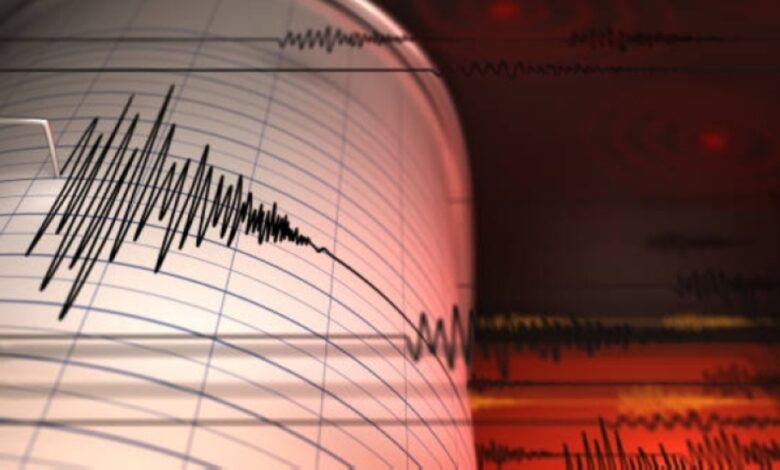
Japan earthquake today: A 5.7 magnitude tremor strikes Honshu coast with no reported casualties

An earthquake measuring 5.7 on the Richter scale struck off the east coast of Japan's main island of Honshu on Wednesday. Honshu is home to Tokyo and most of the country's major cities. This event is part of a series of typical seismic activities in the region, given Japan's sensitive geographic location.
Earthquake details and monitoring data
The European-Mediterranean Seismological Centre (EMSC) explained in an official statement that the earthquake occurred deep in the sea, with its epicenter located 31 kilometers below the sea surface. The observatory noted an important technical point regarding the earthquake's magnitude estimate: it had initially estimated the magnitude at 6.5 before updating its data and revising the magnitude to 5.7 after a more thorough review of the seismic waves—a routine procedure often performed in the first few minutes after an earthquake.
As of the time of writing this report, there have been no official reports from Japanese authorities or international news agencies indicating material damage to infrastructure or human casualties as a result of the earthquake. The Japanese Meteorological Agency has not issued any immediate warnings about the possibility of tsunami waves, which is usually the greatest concern in such maritime incidents.
Japan and its location on the Ring of Fire
News of earthquakes in Japan is of particular importance and attracts global attention due to the country's geological location. Japan lies on the Pacific Ring of Fire, a horseshoe-shaped region characterized by intense seismic and volcanic activity. In this area, several major tectonic plates meet, including the Pacific Plate and the Philippine Sea Plate, making Japan one of the most earthquake-prone countries in the world. The country experiences thousands of earthquakes annually, ranging from imperceptible to powerful.
Infrastructure and disaster preparedness
Despite the frequency of these natural phenomena, Japan is considered a global model in disaster preparedness. Thanks to strict building codes that have been continuously developed and updated, especially after the 1995 Kobe earthquake and the devastating 2011 Tohoku earthquake, Japan has been able to construct buildings and skyscrapers capable of absorbing shocks and swaying with earthquakes instead of collapsing. This advanced level of civil engineering explains why earthquakes of magnitude 5.7 or even 6 pass in Japan with minimal damage, while the same magnitude could cause immense destruction in other countries lacking such infrastructure.
Historical background and its impact
The memory of the 2011 Tohoku earthquake and tsunami remains fresh in the minds of those monitoring any seismic activity off the coast of Honshu. That historic event prompted the Japanese government to strengthen its early warning system (J-Alert), which sends immediate alerts to mobile phones and television screens seconds before powerful seismic waves arrive, giving residents precious time to take shelter. Experts confirm that the current 5.7 magnitude earthquake falls within the moderate range that Japan's infrastructure handles with high efficiency. However, authorities remain on high alert for any potential aftershocks that may follow the main quake.