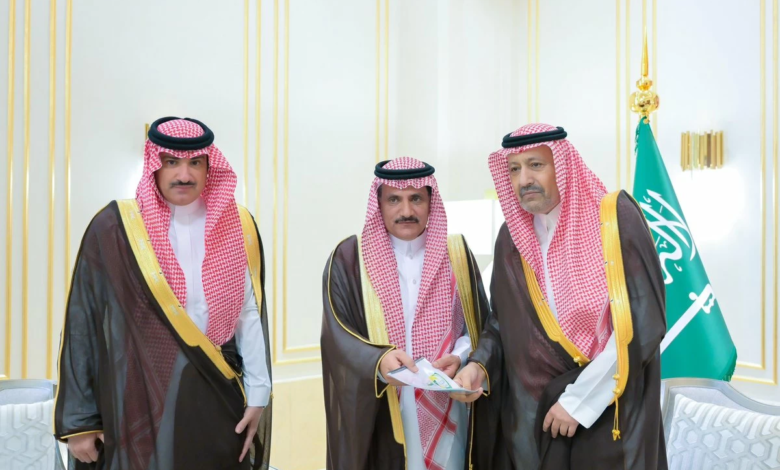
The Prince of Al-Baha congratulates the women of Hijaz on their promotion to the first division league

In a move reflecting the strong official support for women's sports in the Kingdom of Saudi Arabia, His Royal Highness Prince Dr. Hussam bin Saud bin Abdulaziz, Governor of Al-Baha Region, received a delegation from Al-Hijaz Sports Club at his office in the Governorate. The delegation included the Governor of Baljurashi, Mr. Nayef bin Mohammed Al-Hazani, the Director of the Ministry of Sports branch in the region, Mr. Bandar Al-Ghamdi, the Chairman of the Board of Directors of Al-Hijaz Club, Mr. Abdullah Al-Duwaihi, in addition to members of the Board of Directors and a number of players from the club's women's football team.
This reception was held to celebrate the historic achievement of the team's promotion to the Saudi Women's First Division Football League for the upcoming season. During the meeting, Prince Hussam bin Saud extended his warmest congratulations to the club's management and players on this well-deserved accomplishment, praising the outstanding technical skills and strong performance the team displayed throughout the season, culminating in this significant promotion.
His Highness stressed the importance of continuing to work hard and persevere to achieve more sporting successes and accomplishments that befit the name of the Al-Baha region and contribute to raising its flag in various sporting events, wishing the team all the best and success in its upcoming journey in the First Division League.
Unlimited support and historic development of women's sports
For his part, the President of Al-Hijaz Club, Mr. Abdullah Al-Duwaihi, expressed his sincere thanks and appreciation to His Royal Highness the Prince of Al-Baha Region for this reception and for his continued support and wise guidance, which has been a major incentive for the club and all athletes in the region. He pointed out that His Royal Highness's interest in developing the sports sector in Al-Baha, including women's sports, represents a fundamental pillar for achieving these accomplishments.
An achievement that aligns with the Kingdom's Vision 2030
This achievement for Al-Hijaz Club comes amidst the significant surge in women's sports in the Kingdom, a direct result of Vision 2030, which aims to empower women and increase community participation in sports activities. Since the launch of the first official women's football league in 2021, the game has witnessed rapid development in terms of organization and competition, providing opportunities for new talents to emerge from across the Kingdom. The promotion of a team from the Al-Baha region confirms that development efforts are no longer limited to major cities but have encompassed the entire nation, contributing to a broader base of participation and the discovery of talents who will support the national teams in the future.