Jeddah Astronomy Society explains the analemma phenomenon and the sun's annual path

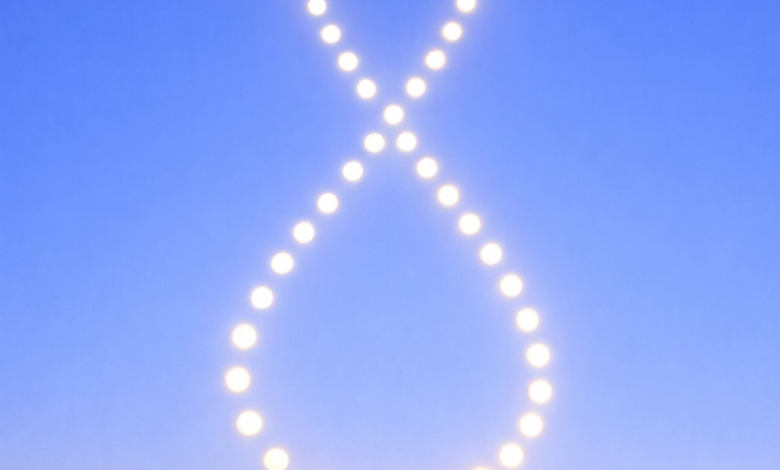
The Jeddah Astronomical Society, through its president, Engineer Majid Abu Zahra, revealed details of one of the most astonishing and visually beautiful astronomical phenomena: the analemma. This phenomenon is manifested by observing the sun's path across the sky over a full year, where the sun appears to trace a geometric shape resembling the number "8" when its position is recorded at the same time each day or week.
Scientific explanation: The dance of the Earth and the Sun
Engineer Abu Zahra explained that this unique shape is not the result of random movement, but rather a precise reflection of two key astronomical factors governing the Earth's relationship with the Sun. The first factor is the tilt of the Earth's axis of rotation at an angle of approximately 23.5 degrees, which is responsible for the changing seasons. The second factor is the Earth's elliptical (oval) orbit around the Sun, rather than a perfectly circular one. This causes the Earth's speed to change as it rotates; it speeds up when it is closer to the Sun and slows down when it is farther away. This variation leads to the apparent position of the Sun in the sky changing from day to day for an observer stationary on Earth.
Historical context and scientific significance
The analemma's significance extends beyond its aesthetic appeal; it represents a visual embodiment of what astronomy calls the "equation of time"—the difference between the time indicated by a sundial and the time indicated by a regular mechanical clock. Historically, understanding the apparent motion of the sun was fundamental to the development of calendars and timekeeping in ancient civilizations. Today, the analemma serves as tangible, visible evidence of the Earth's sphericity and its rotation around the sun, providing rich educational material for students and astronomy enthusiasts to understand celestial mechanics beyond abstract theories.
How to monitor and document the phenomenon
Regarding the method of observing this phenomenon, the head of the Jeddah Astronomical Society pointed out that documentation requires patience and precision. A digital camera securely mounted on a tripod can be used to ensure a stable angle throughout the year. He emphasized the necessity of using a solar filter to protect the camera sensor and the observer's eye, along with adhering to a fixed time for shooting, such as 10:00 AM. The process requires setting the shutter speed between 1/1000 and 1/8000 of a second and a narrow aperture (f/7.1 – f/11) to obtain a clear image of the sun's disk.
When the captured images are combined, the summer solstice (longest day) appears at the top of the figure eight, while the bottom represents the winter solstice (shortest day). Abu Zahra added that starting observations on January 21, 2026, will allow photographers to complete a full cycle by January 2027.
The shape varies according to the geographical location
It is worth noting that the shape of the analemma varies depending on the observer's geographical location on Earth. In Saudi Arabia, the shape appears as a distinct vertical extension, high above the horizon. In more northerly countries like Egypt and Lebanon, the shape tends to be more horizontally expansive and closer to the horizon, especially in winter. In regions near the equator or in the south, such as Yemen, the shape exhibits different characteristics, confirming that what we see is a result of our relative position in this vast universe.