The Saudi stock index declined, closing at 10,325 points with trading volume of 4 billion

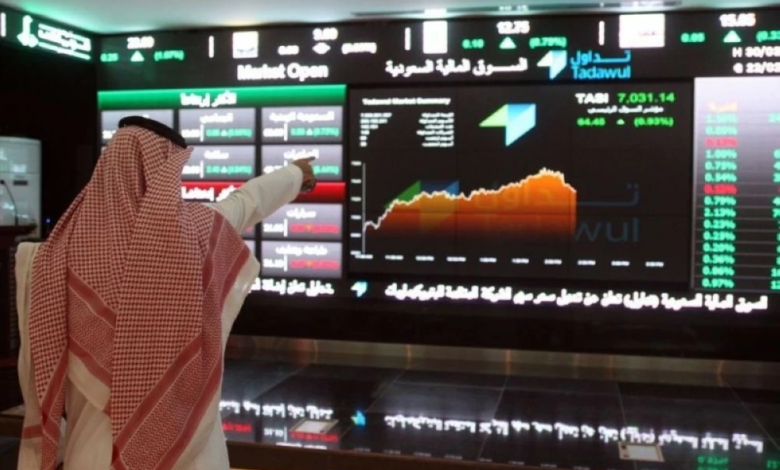
The Saudi Stock Exchange's main index closed lower today, declining by 38.83 points to settle at 10,325.20 points. Trading activity was brisk, with a total value of approximately 4 billion Saudi riyals, reflecting mixed performance across different sectors within the market.
Market and company performance details
According to the Saudi Press Agency's daily economic bulletin, 243 million shares were traded. Market data showed a clear divergence in the performance of listed companies, with 61 companies recording an increase in their market value, while the screens were predominantly red as 191 companies saw their shares decline, indicating selling pressure that affected most sectors during the session.
Regarding the most affected stocks, Sidq, Al Yamamah Steel, Shari, Industries, and Al Kathiri topped the list of gainers. Conversely, Bahri, Burgerizer, ACWA Power, Intaj, and Naseej saw the largest declines, with their share prices fluctuating between 6.32% and 5.87%.
Most actively traded stocks and the parallel market
In terms of trading activity, shares of Saudi Export Development Company (SADC), Americana, BATC, Saudi Aramco, and Darb Saudi were the most actively traded by volume. However, in terms of monetary value, shares of major companies including Saudi Aramco, SABIC, Al Rajhi Bank, ACWA Power, and stc led the way, reflecting the concentration of liquidity in leading companies with significant weight in the index.
In a related context, the Saudi parallel stock index (Nomu) also closed lower today by 144.88 points, to stand at a level of 23226.94 points, with trading valued at 24 million riyals, and a trading volume of more than two million shares.
Economic importance and financial market context
The performance of the Saudi stock market is of particular importance as it is the largest financial market in the Middle East and North Africa region and a reflection of the strength of the Saudi economy. These movements in the index occur within the context of natural economic cycles influenced by various factors, including global oil prices, interest rates, and the quarterly financial results of listed companies.
The Saudi market is a cornerstone of the Financial Sector Development Program, one of the programs under the Kingdom's Vision 2030, which aims to develop an advanced financial market that contributes to financing the private sector and boosting investment. The liquidity level, which exceeded 4 billion riyals despite the recent decline, demonstrates the market's continued attractiveness to local and international investors and its capacity to handle large trading volumes thanks to the advanced technological infrastructure of Tadawul (the Saudi Stock Exchange).
The presence of giant companies such as Aramco, SABIC and Al Rajhi in the list of the most active by value confirms the leading role of these institutions in steering the general index, as the main movements of the index are often linked to the performance of these major economic entities and their impact on global and regional economic variables.