The Saudi Foreign Minister discusses developments in Gaza with the Palestinian Prime Minister

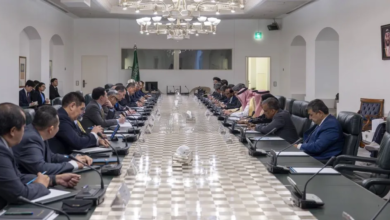
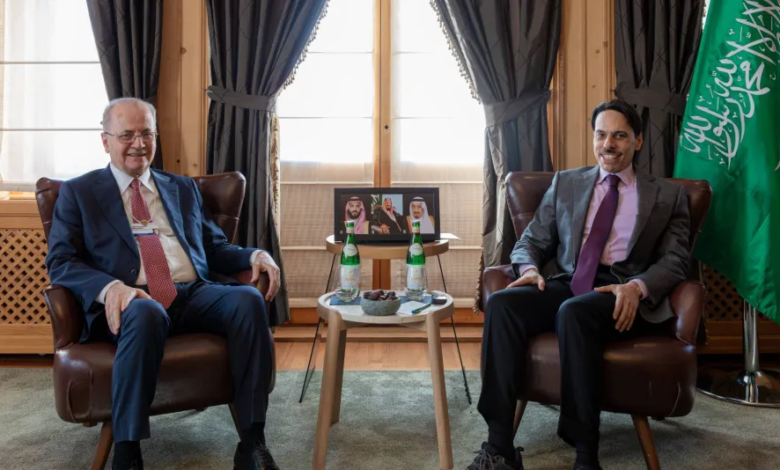
As part of ongoing Arab diplomatic efforts to contain the current crisis in the region, Saudi Foreign Minister Prince Faisal bin Farhan held an important meeting with Palestinian Prime Minister and Foreign Minister Dr. Mohammad Mustafa to discuss the latest field and political developments in and around the Gaza Strip. This meeting comes as part of a series of intensive consultations led by Saudi Arabia to unify the Arab and Islamic position in the face of the ongoing military escalation.
Coordinating positions and unifying diplomatic efforts
The meeting addressed in detail the efforts underway to achieve an immediate and sustainable ceasefire, with both sides emphasizing the need for the international community to fulfill its legal and moral responsibilities towards unarmed civilians. Discussions focused on the importance of increasing the flow of humanitarian aid and relief to all areas of the Gaza Strip without hindrance, given the deteriorating living and health conditions that threaten an unprecedented humanitarian catastrophe.
General context and pivotal Saudi role
This meeting cannot be separated from the broader context of Saudi Arabia's actions since the outbreak of the crisis. Riyadh has spearheaded tireless efforts through its chairmanship of the extraordinary joint Arab-Islamic summit and the formation of the ministerial committee that emerged from it, which has toured the world's capitals to push for a political solution. These actions underscore the steadfastness of the Saudi position in support of the Palestinian cause, which it considers the primary Arab issue, and the Kingdom's ongoing efforts to garner international support for the recognition of an independent Palestinian state.
The importance of the event and its regional and international impact
This meeting is of particular importance given the sensitive timeframe the region is experiencing, as the Palestinian leadership, in coordination with its Arab allies, particularly Saudi Arabia, seeks to formulate a unified political vision for the post-war period. This vision centers on rejecting the forced displacement of Palestinians and affirming the unity of Palestinian territories in the West Bank, Gaza Strip, and East Jerusalem.
Towards a comprehensive political horizon
The two sides also discussed the need to find a genuine and serious political horizon that restores credibility to the peace process, guaranteeing the legitimate rights of the Palestinian people, foremost among them their right to self-determination and the establishment of their independent state on the June 4, 1967 borders with East Jerusalem as its capital, in accordance with the Arab Peace Initiative and relevant international resolutions. This Saudi-Palestinian coordination is a fundamental pillar in confronting current challenges and preventing the expansion of the conflict in the region.