Jeddah Municipality addresses 159 water sites and combats mosquitoes after the rains

In response to the recent rainfall, the Jeddah Municipality the intensification of its field operations. Specialized teams have begun surveying, spraying, and implementing preventative treatment measures at water accumulation sites across 11 sub-municipalities. These efforts are part of a comprehensive plan to mitigate the effects of the rain that struck the governorate last Tuesday and to proactively limit the spread of pests that could threaten public health.
Field mobilization and massive logistical preparations
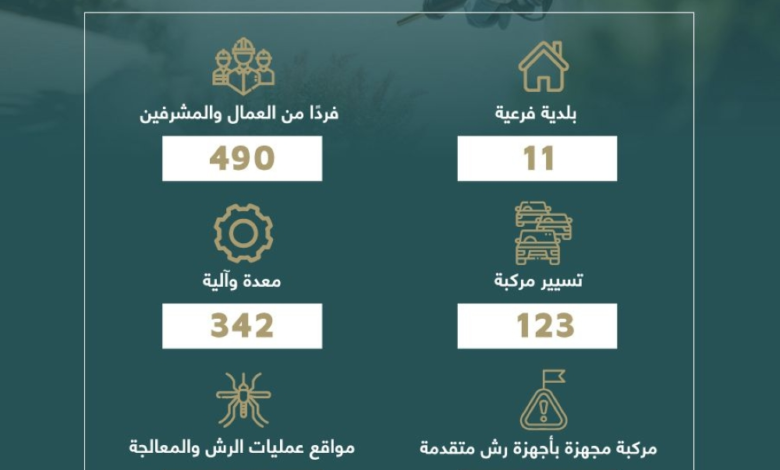
To ensure speed and efficiency, the municipality raised the readiness of its environmental sanitation teams to maximum capacity, allocating a workforce of approximately 490 specialized workers and supervisors. This workforce was supported by a fleet of 123 vehicles and 342 pieces of various equipment, in addition to 14 vehicles equipped with the latest advanced spraying technologies. These intensive efforts resulted in the implementation of precise spraying and treatment operations in 159 locations identified as stagnant water areas and breeding grounds for mosquitoes.
The importance of environmental sanitation in coastal areas
These measures are particularly important given Jeddah's geographical and coastal nature, where stagnant water after the rainy season provides a breeding ground for disease vectors, especially mosquitoes. The municipality is implementing a preventative strategy aimed at disrupting the insect life cycle before it is complete, directly contributing to protecting residents from seasonal illnesses and enhancing public health. These initiatives are an integral part of the municipal sector's commitment to improving the urban landscape and raising the quality of life, in accordance with established environmental and health standards.
Comprehensive emergency plan and home-based pest control
In parallel with the fieldwork in the streets and squares, the General Directorate of Environmental Health activated an emergency plan to support daily operations within residential neighborhoods. The plan included expanding the scope of the control efforts to include:
- Spraying work inside and outside homes.
- Addressing water accumulation in buildings under construction.
- Spraying public gardens, nurseries, and the area surrounding homes.
Field teams use pesticides with a residual effect to ensure the effectiveness of preventative treatment for as long as possible in the affected areas.
Call for community participation
In closing, the Jeddah Municipality emphasized the importance of community participation in the success of these efforts, urging residents to cooperate and immediately report any stagnant water or insect breeding grounds. Citizens and residents can submit reports 24/7 through the unified reporting center at 940 or via the "Baladi" application. The municipality affirmed its continued commitment to working diligently to protect public health and enhance environmental sanitation throughout the governorate.