Jeddah's rainfall reaches 135 mm: Municipality on high alert and record-breaking figures

Jeddah experienced exceptional weather conditions in the past few hours, prompting the Jeddah Municipality to reveal details of its intensive field efforts to address the effects of the heavy rainfall. According to data released by the National Center for Meteorology , the city recorded record rainfall levels, significantly exceeding the usual annual averages, placing it at the forefront of Saudi cities in terms of rainfall intensity over such a short period.
Record numbers in record time
According to official monitoring stations, Jeddah topped the list of areas experiencing rainfall in the Kingdom, recording unprecedented amounts in just five hours. Readings showed varying rainfall amounts, with the Al-Jawhara Stadium station the highest at 135 mm , reflecting the intensity and heavyness of the storm. In other locations, the Al-Basateen district station recorded 81 mm, while the King Abdulaziz International Airport station recorded 51 mm. These figures clearly indicate the widespread nature of the weather system, affecting various neighborhoods and vital facilities throughout the city.
Climate context and the importance of the event
This rainfall event is particularly significant given Jeddah's coastal location and climate. The fact that rainfall reached 135 mm in just a few hours is a remarkable climatic occurrence, equivalent to what might fall in entire seasons in previous years. Weather experts indicate that the recurrence of such heavy rainfall reflects the climate changes the region is experiencing, underscoring the importance of maintaining robust infrastructure to handle sudden and intense water flows.
Field mobilization and efforts to contain the effects
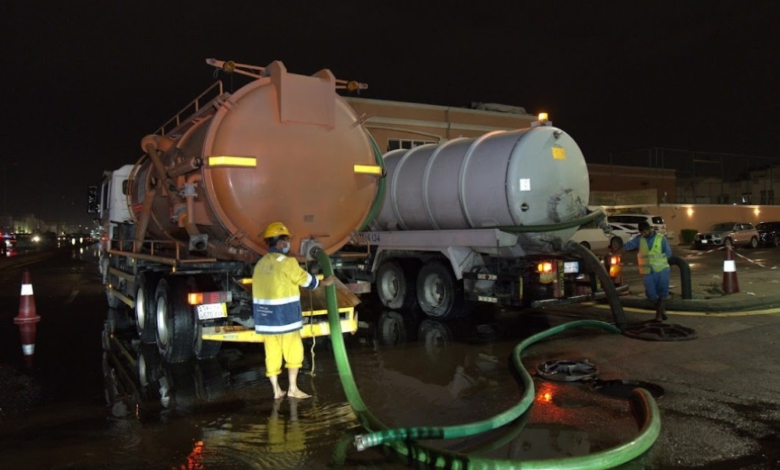
From the very first moments of the rainfall, the Jeddah Municipality declared a state of maximum alert, raising its readiness level through a comprehensive emergency plan covering 11 sub-municipalities and 15 support centers. To ensure a rapid response, a massive force of 7,160 personnel , supported by a fully equipped fleet of 1,621 specialized pieces of equipment and machinery.
Field efforts focused on several key areas:
- Water accumulations were removed from the streets and main roads to ensure smooth traffic flow.
- Operating and maintaining rainwater drainage networks with high efficiency.
- Deploy mobile and stationary pumps at critical points.
- Immediate response to reports from residents received through official channels.
Infrastructure and drainage projects
This rainfall coincided with ongoing work on infrastructure projects within Jeddah's strategic stormwater drainage program. The existing system, along with the channels and pumping stations currently under construction, has proven effective in handling large volumes of water, mitigating the impact in many areas and improving drainage speeds compared to previous years. These projects are a cornerstone for enhancing the quality of life in the city and protecting public and private property from the risks of flash floods.
Public safety recommendations and warnings
In closing, the Jeddah Municipality expressed its appreciation for the cooperation of residents and visitors and their role in supporting field efforts by adhering to instructions. The Municipality emphasized the importance of following safety guidelines, most importantly staying away from areas where water has accumulated, avoiding contact with light poles or electrical sources in the streets, and not attempting to cross valleys or deep bodies of water.
It also called on everyone to take the initiative to report any emergencies or field observations via the “Baladi” application or by contacting the unified reporting center (940), to ensure that they are dealt with as quickly as possible.