Saudi support for Gaza: King Salman Center distributes meals and food baskets

Ongoing relief efforts to alleviate suffering in Gaza
As part of its longstanding humanitarian role, the King Salman Humanitarian Aid and Relief Center continues to provide support to the Palestinian people in the Gaza Strip through the implementation of urgent relief programs aimed at alleviating the worsening humanitarian crisis. These efforts are part of the Saudi popular campaign to aid the Palestinian people, reflecting the Kingdom's commitment, both leadership and people, to stand with their brothers and sisters in times of hardship.
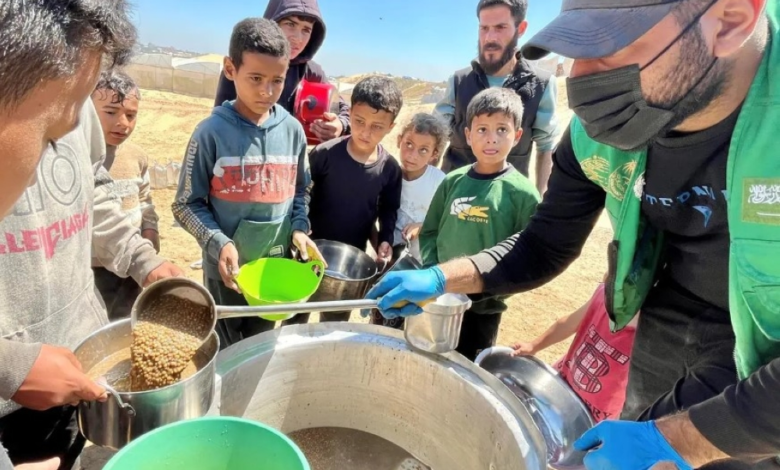
In its latest field operations, the center distributed large quantities of essential food aid. Its central kitchen distributed 25,000 hot, complete meals in central and southern Gaza, benefiting 25,000 displaced and affected individuals. Simultaneously, the center distributed 1,718 food baskets in Khan Younis, benefiting 10,308 individuals. Each basket contained essential food items sufficient for a family for several days.
The historical context of Saudi support for the Palestinian cause
This aid was not a spontaneous gesture, but rather an extension of the Kingdom of Saudi Arabia's longstanding and unwavering support for the Palestinian cause on all political, economic, and humanitarian levels. For decades, the Kingdom has been among the largest supporters of the Palestinian people, whether through direct government aid or through grassroots campaigns involving citizens and residents. The King Salman Humanitarian Aid and Relief Center was established in 2015 to serve as the Kingdom's official arm for managing and organizing international humanitarian work, ensuring that aid reaches those in need worldwide efficiently and transparently, with particular attention to crises in the Arab region.
The importance and expected impact of aid
This aid is of paramount importance under the current circumstances. Locally, these meals and food baskets directly contribute to combating hunger and malnutrition, which threaten hundreds of thousands in the Gaza Strip, and provide a lifeline to families who have lost their livelihoods and homes. Regionally and internationally, these efforts underscore the Kingdom's role as a regional stabilizing force and an active and responsible member of the international community, committed to humanitarian principles and striving to alleviate human suffering. They also represent a powerful message of solidarity from the Saudi people to the Palestinian people, bolstering their resilience in the face of the immense challenges they are experiencing, and highlighting the Kingdom's pivotal role in leading relief efforts in the region.