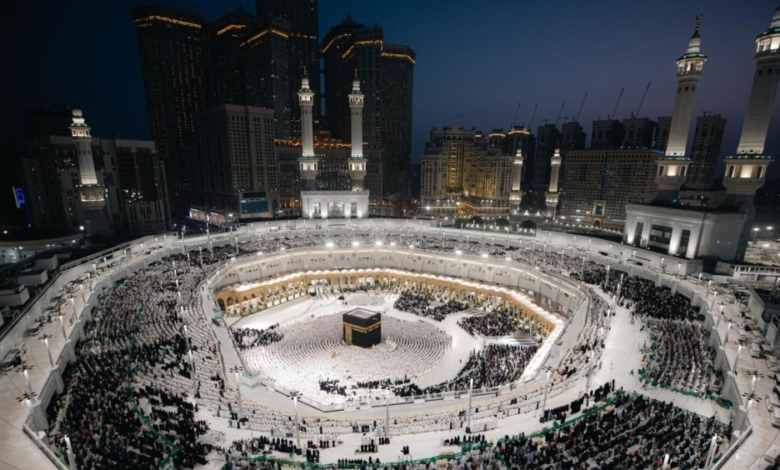

The Ministry of Hajj and Umrah in Saudi Arabia has announced the start of the Hajj package booking phase for the 1447 AH season, extending an invitation to citizens and residents within the Kingdom with valid residency permits who wish to perform the pilgrimage. This step, accessible through the "Nusk" application and dedicated website, complements the data registration phase that began earlier in Ramadan, as part of the Ministry's efforts to facilitate the pilgrims' journey and ensure the provision of the best possible services.
Digital transformation and facilitating Hajj procedures
This announcement comes within the context of the significant digital transformation underway in the Hajj and Umrah system, in line with the Kingdom's Vision 2030, which aims to facilitate the hosting of pilgrims to the Two Holy Mosques. The "Nusk" platform is a cornerstone of this transformation, allowing applicants to transparently review available packages and choose those that best suit their needs and budgets. This eliminates traditional paper transactions and reduces fraud and scams, thus providing a safe and reliable environment for pilgrims.
Details regarding payment deadlines and booking procedures
The Ministry clarified the payment mechanism to ensure the seriousness of reservations and fairness in allocation. A 72-hour payment period was set for reservations made by 27 Dhu al-Qi'dah 1447 AH. To expedite reservations as the season approaches, this period is reduced to just 6 hours for reservations made from 28 Dhu al-Qi'dah 1447 AH onwards. The Ministry emphasized that failure to pay within these specified periods will result in automatic cancellation of the reservation, thus opening up opportunities for other beneficiaries.
The importance of organization and its impact on the season
This precise scheduling is crucial for crowd management and season planning. By setting strict payment deadlines, the Ministry ensures that all available seats are fully utilized and not held for extended periods without confirmation, thus enhancing operational efficiency for Hajj service companies and providers. This measure also helps eliminate the black market and ensures that permits reach their rightful recipients in a timely manner.
Cancellation and Refund Policy
Regarding the cancellation policy, the Ministry has established a clear timeline that safeguards the rights of all parties. Beneficiaries can cancel their reservations and receive a full refund without any deductions until 30 Shawwal 1447 AH, provided that a Hajj permit has not yet been issued. After the permit is issued, cancellations are subject to the applicable deductions based on the application date. The Ministry emphasized that payments made from 1 Dhu al-Hijjah 1447 AH until the platform's closure are non-refundable due to financial and logistical commitments already made.
The ministry urged all those wishing to perform Hajj to complete their procedures quickly through official channels only, and to avoid dealing with any unlicensed entities, noting that the unified call center (1966) is available to answer all inquiries and provide the necessary support to pilgrims around the clock.