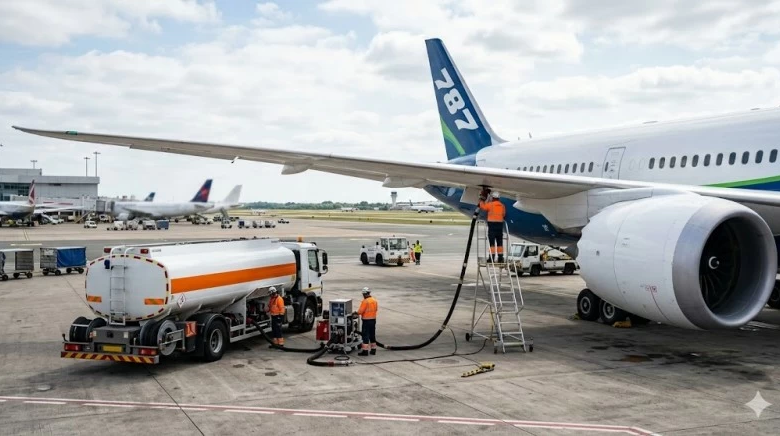

Global energy markets have witnessed dramatic shifts in recent hours, with jet fuel prices at an unprecedented rate, reaching their highest levels in Europe since the outbreak of the Russian-Ukrainian war in 2022. These alarming increases come amid growing concerns about disruptions to energy exports from the Middle East, posing new economic challenges to the global aviation sector.
According to recent data published by Bloomberg, jet fuel prices in Europe reached $1,222.25 per ton , marking a staggering jump of approximately 48% in just two days. This dramatic surge reflects the panic gripping markets due to geopolitical tensions, threatening the stability of vital supply chains for the continent.
The aftermath of the war and record numbers
The impact wasn't limited to the final price of fuel; it extended to technical market indicators as well. The so-called "jet fuel premium" rose above the price of crude oil in Northwest Europe, exceeding $70 per barrel . This figure represents a record high not seen in data tracked by General Index since the 2008 global financial crisis, indicating immense pressure on refineries and a severe shortage of available supply.
The Strait of Hormuz: A lifeline and a danger
The danger of the current situation lies in the European Union's heavy strategic dependence on imports passing through the Strait of Hormuz . Statistics indicate that Europe relies on this vital waterway for 50% of its jet fuel needs, a staggering figure compared to just 12% for diesel fuel. This import structure makes the European aviation sector the most vulnerable and susceptible to any security or military disruptions that might occur in the Strait or the Arabian Gulf region.
Expected economic impacts
This surge is expected to have a significant impact on both international and domestic airlines, as fuel typically accounts for 25% to 30% of their operating costs. With this sudden increase, airlines may be forced to pass these costs on to passengers, leading to a likely rise in airfares in the coming period. This could negatively affect the recovery of the travel and tourism sector, which had begun to rebound after the pandemic.
Moreover, sustained prices at these high levels could fuel inflation in European economies, which are already under economic pressure, presenting policymakers with a real dilemma in securing affordable energy supplies amid a highly complex geopolitical environment.