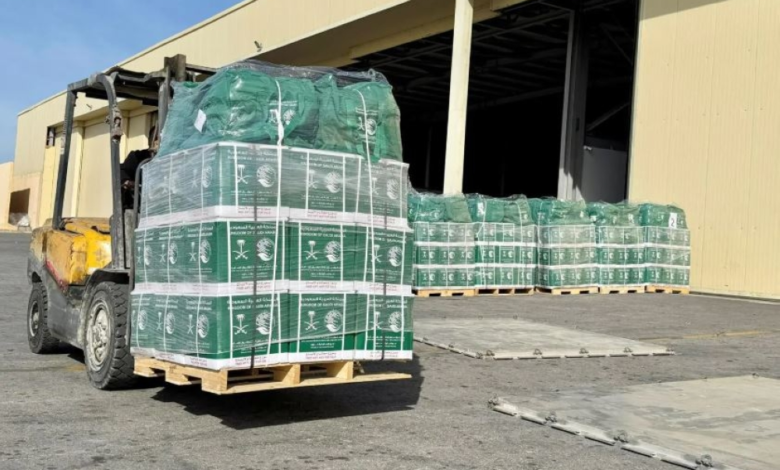
The 76th Saudi plane arrives to deliver aid to Gaza with food and shelter supplies

As part of the ongoing humanitarian efforts of the Kingdom of Saudi Arabia to support the brotherly Palestinian people, the 76th Saudi relief plane arrived today at Al-Arish International Airport in the Arab Republic of Egypt. This plane is part of the Saudi air bridge operated by the King Salman Center for Relief and Humanitarian Aid, in implementation of the directives of the wise leadership to stand by the brothers in Palestine during the current crisis.
The new aircraft is carrying a massive shipment of urgent humanitarian aid, including complete food baskets and shelter kits, destined for those affected within the Gaza Strip. This step comes in full and close coordination with the Saudi Ministry of Defense and the Kingdom's embassy in Cairo, to ensure the aid reaches its destination as quickly as possible through the border crossings in coordination with the Egyptian authorities.
The arrival of this aid plane is of paramount importance given the tragic circumstances faced by the residents of the Gaza Strip, where the population is suffering from severe shortages of food and shelter due to the extensive destruction of infrastructure and homes. The shelter kits aim to provide safe and temporary housing for families who have lost their homes, while the food baskets will help alleviate the looming hunger crisis warned against by international organizations.
This aid, flowing through the Saudi air bridge, which has now reached its 76th destination, reflects the depth of the fraternal and historical ties between the Kingdom and Palestine. Saudi Arabia has always been at the forefront of countries supporting the Palestinian cause, not only politically, but also in the humanitarian and relief spheres, reaffirming its unwavering commitment to alleviating the suffering of the Palestinian people in various crises.
It is worth noting that this airlift coincides with a widespread public campaign through the “Sahem” platform, which demonstrated the strong solidarity of the Saudi people with their brothers and sisters in Gaza. The plane's cargo is scheduled to be unloaded at El Arish Airport, after which it will be loaded onto trucks for transport into the Gaza Strip and distributed to those in need in the most affected areas, in an effort to provide a lifeline to the besieged civilians.