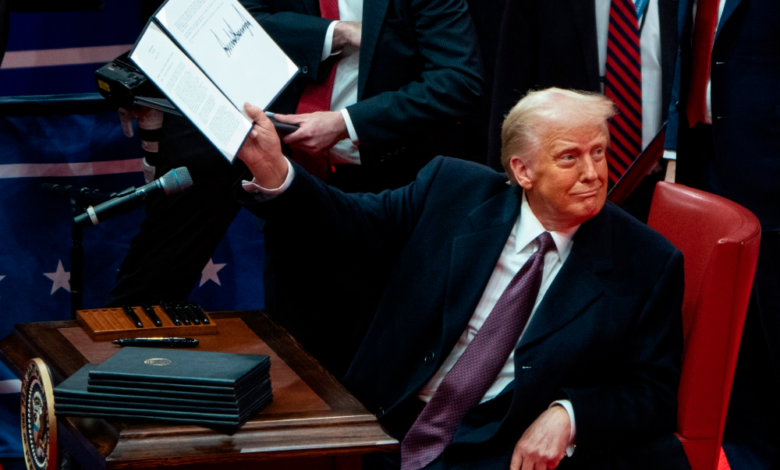
On Monday, U.S. Federal Judge Aileen Cannon issued a ruling blocking the release of former Special Counsel Jack Smith's report on the investigation into President Donald Trump's possession of classified documents. This decision brings to a close one of the most controversial legal cases in the United States in recent years, underscoring the protection of defendants' rights even after cases are closed.
Reasoning behind the decision: Protecting the presumption of innocence
Judge Cannon granted the request by President Trump's defense team and two of his co-defendants to block the release of the final investigative report. She based her decision on established legal principles, stating that releasing evidence gathered by the prosecution in a case that did not result in a conviction would be "prejudicial" and contrary to justice.
Judge Cannon wrote in decisive terms in her ruling, stating, “The release of material from files not intended for publication would be contrary to the most basic principles of justice and fairness.” She emphasized that the former defendants in this case, like any other defendant in a similar situation, “remain presumed innocent,” and that publishing a one-sided report without an opportunity for a court defense could unjustly damage their reputations.
Legal context and timeline of the case
To understand the implications of this decision, one must go back to July 2024, when Judge Cannon—appointed by Trump during his first term—issued a surprising ruling dismissing the entire case. She based her decision on a technical legal argument that the appointment of Jack Smith as special counsel was “unconstitutional.”.
Although the Justice Department initially challenged this decision, the political landscape changed dramatically after Donald Trump's victory in the November 2024 presidential election. Following the victory, the Justice Department decided to drop the appeal and end the prosecution, in line with the department's long-standing policy of prohibiting the prosecution of a sitting president, thus paving the way for the end of these prosecutions.
The impact of the decision and dimensions of other issues
This legal trajectory isn't limited to the documents issue; it extends to other cases the US president has faced. Trump was also accused of conspiring to overturn the results of the 2020 election, which he lost to Joe Biden. As with the documents case, Jack Smith dropped that case as well, in response to the new political and legal realities following the election.
In her final ruling, Judge Cannon noted the scarcity of legal precedents in this regard, stating, “The Court has difficulty finding a case in which a former special prosecutor has issued a report after bringing criminal charges that did not result in a conviction.” This comment underscores the exceptional nature of the prosecutions targeting a former president and a winning presidential candidate.
Background of the original charges
It is worth noting that Special Counsel Jack Smith had charged Trump with moving boxes containing highly classified and sensitive national security documents from the White House to his Mar-a-Lago resort in Florida after leaving office in January 2021. The charges included allegations of obstructing the government's efforts to recover those documents, charges which Trump categorically denied, describing them as a political witch hunt, before they were finally dropped.