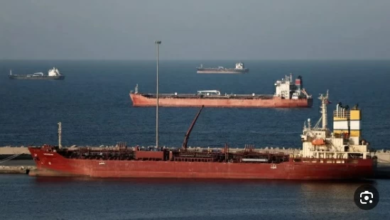

According to what was published by “Al Arabiya Business”, a large number of ships that were heading to the ports of the Arabian Gulf changed their course towards the ports of the Red Sea, in light of the disturbances that the movement of navigation in the region is witnessing.
According to Al Arabiya, cargo ships have begun arriving at the Yanbu commercial port on the Red Sea coast, loaded with goods destined mainly for the Gulf markets, where they are being unloaded in preparation for being transported overland to their final destinations via the road network.
This shift in shipping routes coincides with a growing trend among shipping companies to use Saudi ports on the Red Sea as alternative transit hubs to the Gulf markets.
Saudi exports reach record levels
MSC Cargo had previously announced the expansion of its cargo transport options between Asia and the Gulf countries via Saudi ports, with a focus on King Abdullah Port and Jeddah Islamic Port as key transit hubs for shipments.
According to the company, these ports allow the use of the land transport network to transport goods to a number of cities and logistics centers in the region such as Riyadh, Dammam and Jubail, in addition to Gulf countries such as Bahrain, Kuwait, Qatar and the UAE.
Shipping data also shows that Saudi oil exports via the Red Sea are poised to hit record levels this March, with increasing reliance on west coast ports, particularly Yanbu, for crude exports as disruptions continue in the Strait of Hormuz.
Saudi Aramco had explained that the East-West pipeline is capable of transporting up to 7 million barrels per day to the Red Sea, of which about 5 million barrels per day are available for export, while the remainder is used to supply local refineries on the west coast.
Bloomberg Agency revealed that oil loading activity at the Yanbu port on the Red Sea has doubled this week compared to last week.
According to what was published by “Al Arabiya Business,” a large number of ships that were heading to the ports of the Arabian Gulf have changed their course towards the ports of the Red Sea, amid the disruptions affecting maritime traffic in the region.
According to “Al Arabiya,” cargo ships have started arriving at the Yanbu commercial port on the Red Sea coast, loaded with goods primarily destined for the Gulf markets, where they are being unloaded in preparation for land transportation to their final destinations via the road network.
This shift in shipping routes comes alongside an increasing trend among shipping companies to use Saudi ports on the Red Sea as alternative transit hubs towards Gulf markets.
Record Levels for Saudi Exports
MSC Cargo had previously announced the expansion of cargo transport options between Asia and Gulf countries via Saudi ports, focusing on King Abdullah Port and Jeddah Islamic Port as key stations for cargo transit.
According to the company, these ports allow the use of the land transport network to move goods to several cities and logistics centers in the region such as Riyadh, Dammam, and Jubail, in addition to Gulf countries like Bahrain, Kuwait, Qatar, and the UAE.
Shipping data also indicates that Saudi oil exports via the Red Sea are poised to reach record levels during the current month of March, amid an increasing reliance on the west coast ports, particularly Yanbu, for crude exports as disruptions in the Strait of Hormuz continue.
Saudi Aramco has clarified that the East-West pipeline is capable of transporting up to 7 million barrels per day to the Red Sea, of which about 5 million barrels per day are available for export, while the remaining portion is used to supply local refineries on the west coast.