KAUST celebrates Omar Yaghi, the first Saudi to win the Nobel Prize in Chemistry

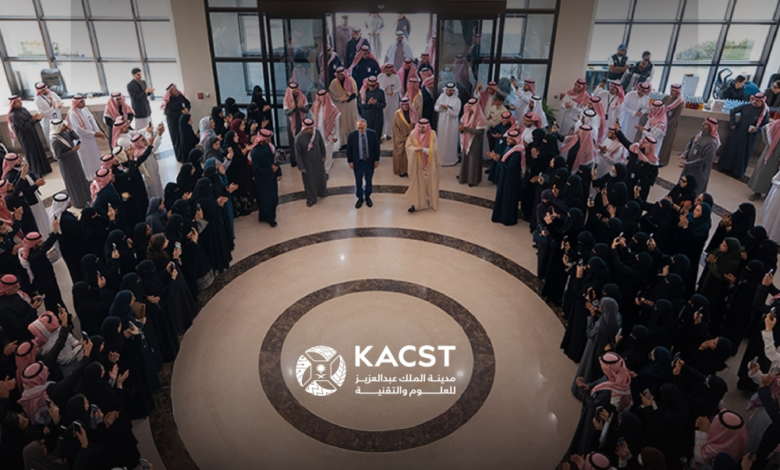
King Abdulaziz City for Science and Technology (KACST) celebrated today an unprecedented scientific and historical achievement for the Kingdom of Saudi Arabia, represented by honoring Professor Omar bin Mounis Yaghi, winner of the 2025 Nobel Prize in Chemistry. This honor comes in celebration of him being the first Saudi scientist to receive this prestigious international prize, and in appreciation of his pivotal role as supervisor of the Joint Center of Excellence in Nanomaterials for Clean Energy Applications, which brings together KACST and the University of California, Berkeley.
Professor Yaghi is considered the true founder of Reticular Chemistry, a revolutionary field that has enabled the design of new materials known as metal-organic frameworks (MOFs) and covalent-organic frameworks (COFs). These materials are characterized by their high porosity and exceptional ability to store gases, sequester carbon, and even extract water from the air in arid desert environments. This research is of major strategic importance globally and locally, as it offers innovative solutions to energy, water, and environmental challenges, placing the Kingdom at the heart of the global scientific movement to address climate change.
During the ceremony, which was attended by His Excellency Dr. Munir bin Mahmoud Al-Dasouqi, President of KAUST, Professor Omar Yaghi emphasized that this achievement would not have been possible without the generous and unwavering support of the wise leadership. In his address, he noted that the research environment in the Kingdom has undergone radical transformations thanks to Vision 2030, which has made innovation and scientific research a cornerstone for building a sustainable knowledge-based economy. He explained that this empowerment has provided Saudi scientists with the necessary tools and opportunities to compete globally and achieve significant breakthroughs in various scientific fields.
This celebration reflects the depth of the strategic partnership between Saudi research institutions and their global counterparts. Yaghi emphasized that the collaboration with KAUST serves as a model for "investing in minds." Experts indicate that a Saudi scientist winning the Nobel Prize will have a far-reaching and inspiring impact on the Arab region, motivating new generations to engage in science, technology, and engineering, and further solidifying the Kingdom's position as a regional and international hub for research and development.
The ceremony included honoring the winning teams in the "Artificial Intelligence Materials Discovery Hackathon," an event reflecting the modern trend of integrating advanced technologies into chemical research. The first place went to the NajdGenesis-Al team for their innovative project: a generative AI platform for creating biomaterials to capture carbon dioxide. The Fabricator.ai team came in second with a project to manufacture materials based on metal-organic frameworks, and the Prime-MOF team took third place for their project predicting the stability of metal-organic frameworks.
The events concluded with an inspiring dialogue session that brought together Professor Yaghi with a select group of talented students and young researchers, where he shared the essence of his decades of experience in international laboratories. In his advice to the rising generation, Yaghi emphasized the importance of patience, perseverance, and building a solid scientific foundation in the early stages, stressing that the path to great discoveries begins with steady steps and an unwavering passion for knowledge.