The future of the cement industry in 2030: KAUST's emissions reduction initiative

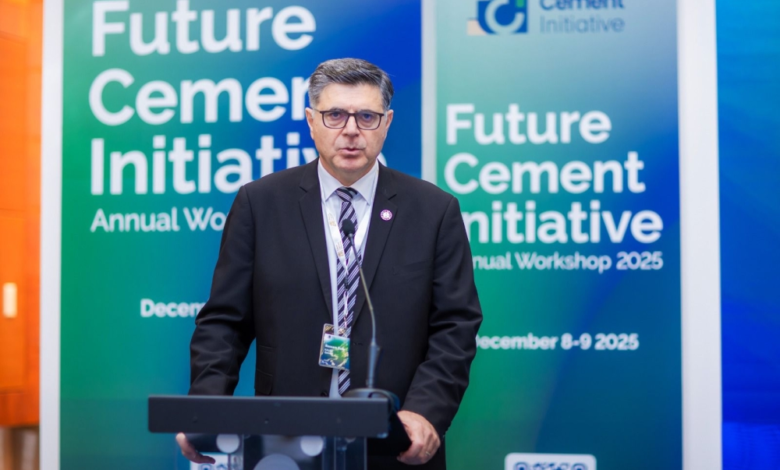
In a strategic move aligned with global shifts toward sustainability, King Abdullah University of Science and Technology (KAUST) hosted the annual Future Cement Initiative (FCI) National Workshop on December 8 and 9. The event saw a remarkable turnout of over 200 participants, including industry leaders, regulators, and leading researchers, who discussed the challenges and opportunities facing the construction sector.
Global challenges and rapid growth
The global cement industry faces a dual challenge: meeting growing demand while simultaneously reducing its carbon footprint. Cement production is estimated to be responsible for a significant portion of global industrial emissions. In this context, workshop participants discussed projections indicating that global cement demand will rise from 4.37 billion tons in 2025 to over 5.5 billion tons by 2030.
This global growth is directly reflected in the Saudi market, where domestic demand is expected to reach approximately 80 million tons annually by the same year. This enormous demand is driven by the unprecedented urban development boom the Kingdom is witnessing, characterized by mega-projects, housing initiatives, and infrastructure development within the framework of Vision 2030.
Innovative solutions from the heart of the Saudi environment
During the workshop, KAUST presented promising results from the first year of the initiative, which focused on utilizing local natural resources to enhance sustainability. Researchers highlighted the discovery of local clay varieties with unique properties that allow them to be incorporated into cement mixes. This innovation directly contributes to reducing reliance on clinker, the most energy-intensive and emission-generating component in cement manufacturing, without compromising the durability and strength of the concrete required in construction projects.
Concrete as a carbon sink: A climatic advantage for the Kingdom
Among the key points discussed was the inherent capacity of concrete to absorb carbon dioxide from the atmosphere over time, a process known as carbonation. Studies reviewed at the workshop revealed that the warm climate and humidity patterns in the Kingdom and the region may accelerate this process compared to colder regions of the world. These findings open new avenues for more accurate emissions recalculations and the development of building standards that take advantage of these environmental characteristics.
Strategic partnerships towards a circular economy
The workshop wasn't limited to research; it also included practical steps, such as a meeting between university leadership and key national stakeholders, most notably the Ministry of Industry and Mineral Resources, represented by His Excellency Engineer Turki Al-Babtain. The meeting focused on aligning scientific research outputs with industrial trends and discussing circular economy models aimed at reducing waste and reusing resources.
In parallel with these efforts, KAUST is currently developing AI-powered materials modeling technologies, which will accelerate the discovery of new high-performance, low-carbon cement mixes, supporting the Kingdom’s efforts to achieve zero neutrality and enhance the efficiency of the construction sector.