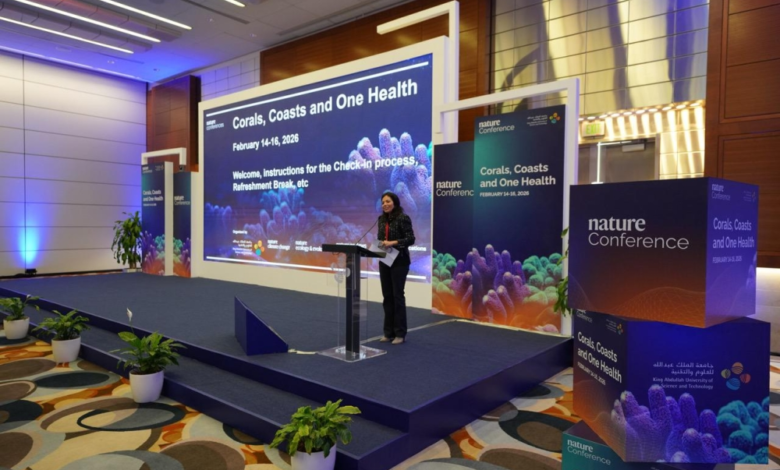
King Abdullah University of Science and Technology (KAUST) has announced a strategic move that represents a turning point in marine conservation. This initiative includes a package of urgent action plans aimed at shifting coral reef protection from the traditional "monitoring and observation" phase to a phase of "active restoration" and direct intervention. The move is being undertaken in collaboration with leading international and local environmental organizations, with the goal of protecting the Kingdom's coastal ecosystems and ensuring sustainable food security.
A strategic shift in protecting the Red Sea
At a three-day international conference hosted by the university at its campus in Thuwal, leading scientists, researchers, and policymakers agreed on the urgent need to translate scientific knowledge and compelling evidence into scalable, on-the-ground conservation plans. This move comes at a time when the world is facing unprecedented climate challenges that threaten marine ecosystems. The Red Sea is one of the world's most important strongholds of climate-resilient coral reefs, making its preservation a global, not just a local, responsibility.
The conference sessions witnessed a remarkable strategic integration between the university and major national entities, most notably the Red Sea International and the National Center for Wildlife Development, to unify coastal development efforts and develop governance frameworks that ensure the long-term resilience of ecosystems, in line with the objectives of the Kingdom’s Vision 2030 and the Saudi Green Initiative, which places environmental protection at the heart of its priorities.
The concept of "One Health": The interconnectedness of humans and the environment
The conference's key outcomes were based on the "One Health" initiative, which demonstrated the close and direct link between marine environmental health and human health. In this context, Professor Raquel Peixoto, a professor in the Marine Science Program at KAUST and a co-organizer of the conference, explained that degraded coral reefs can become breeding grounds for pathogens, making proactive institutional intervention to restore them an urgent necessity that protects both the economy and human health.
Peixoto noted that coral degradation threatens fisheries and weakens natural barriers that support the quality of life of coastal communities, stressing that the “One Health” approach demonstrates that ecosystem health, food security, and economic stability are interconnected and inseparable.
The importance of transitioning to active restoration
International experts, with the support and strategic partnership of the global organization Nature, discussed mechanisms for implementing "active restoration" models. This concept means moving beyond simply studying the causes of coral reef death to actually initiating cultivation and rehabilitation processes, and using biotechnologies to enhance coral resilience against rising ocean temperatures. This approach represents a qualitative leap, placing the Kingdom at the forefront of countries implementing applied scientific solutions to protect their natural resources, rather than relying solely on theoretical solutions.
This scientific and practical movement led by KAUST confirms the Kingdom of Saudi Arabia’s commitment to playing a leading role in addressing global environmental challenges, harnessing its research capabilities and international partnerships to ensure a sustainable future for generations to come, and to protect the priceless treasures of the Red Sea.