Al-Falih: The World Cup and Expo 2030 are changing Saudi investment priorities

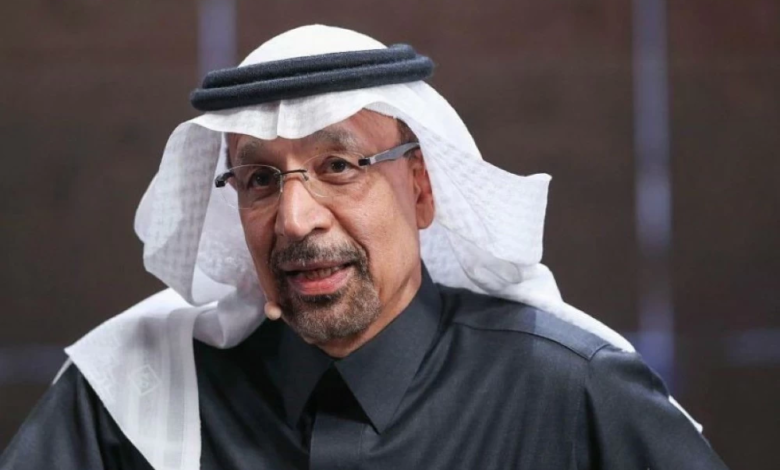
Saudi Investment Minister Khalid Al-Falih confirmed that winning the bid to host major global events such as the 2034 World Cup and Expo 2030 has fundamentally changed the Kingdom’s investment priorities, necessitating the rescheduling of some projects to ensure maximum economic efficiency.
The impact of global events on the national agenda
During his participation in a ministerial session at the Public Investment Fund and Private Sector Forum, Al-Falih explained that these global events are not merely fleeting occurrences, but rather massive economic drivers requiring a comprehensive infrastructure. He pointed out that the Kingdom is now obligated to establish a vast network of sports facilities and stadiums, in addition to advanced logistics networks to serve visitors and participants, which has imposed new priorities that were not addressed with the same urgency in previous plans.
In a related context, the minister pointed out that air transport projects, such as the completion of King Salman International Airport and the expansion of King Khalid Airport, are at the heart of these new priorities to ensure the accommodation of the expected human flows during these global events.
Investment fund growth and betting on artificial intelligence
Al-Falih addressed the remarkable growth achieved by the Public Investment Fund (PIF) , whose assets have surged from 600 billion riyals to nearly 4 trillion riyals, reflecting the Kingdom's strong financial position. He emphasized the Fund's high degree of flexibility, enabling it to adapt to economic and geopolitical changes, and stressed that decisions to postpone certain projects stem from thorough feasibility reviews to ensure the sustainability of returns.
He also highlighted the strategic focus on the artificial intelligence , describing it as a cornerstone for the next phase. He noted that this sector will witness hundreds of billions of dollars in global investments, and that the Kingdom aims to be at the forefront of countries benefiting from this technology to serve multiple vital sectors, thus enhancing the competitiveness of the Saudi economy regionally and internationally.
Future vision and economic resilience
Al-Falih concluded by emphasizing that the Kingdom has made significant progress in achieving the goals of Vision 2030, having already accomplished half of the target related to investments contributing 30% to the size of the economy. He added that the high level of governance enjoyed by the Public Investment Fund (PIF), and the balance between the board of directors and the executive management, empower the Kingdom to make bold and unconventional decisions, such as the NEOM and The Line projects, while maintaining the necessary flexibility to adjust its course in accordance with the supreme national interest.