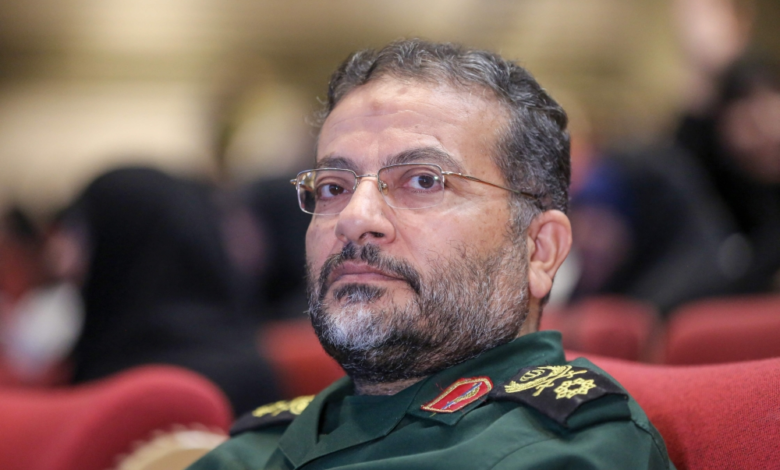

Iran's Revolutionary Guard Corps (IRGC) announced in an official statement the death of its Basij militia commander, Gholamreza Soleimani. This definitive confirmation came shortly after the Israeli military claimed responsibility for targeting the prominent Iranian leader in a precision airstrike, amid unprecedented regional tensions and talk of open confrontation involving the United States, Israel, and Tehran.
Revolutionary Guard statement and details of the incident
The official website of Iran's Revolutionary Guard, Sepah News, published a brief statement confirming the news, which read: "Commander Gholam Reza Soleimani, head of the Basij militia, was martyred in a terrorist attack carried out by the American-Zionist enemy." This official Iranian statement reflects the level of tension and directly points the finger at Washington and Tel Aviv as being involved in the assassination, which portends serious repercussions for the security landscape in the Middle East.
Who is Gholam Reza Soleimani and what are the Basij forces?
Gholamreza Soleimani was one of the most prominent military leaders in the Iranian regime. He was appointed head of the Basij militia in 2019 by a direct decree from Iranian Supreme Leader Ali Khamenei. The Basij, or "Mobilization Forces of the Poor and Oppressed," is a paramilitary militia established in 1979 by order of Ayatollah Ruhollah Khomeini. It plays a pivotal role in maintaining internal security in Iran, suppressing protests, and providing ideological and logistical support for the operations of the Islamic Revolutionary Guard Corps (IRGC) both within and outside Iran's borders. The assassination of a figure of this stature represents a significant strategic and morale blow to the military leadership in Tehran.
Regional context and the ongoing shadow war
This incident comes amid what is described as a "shadow war" that has recently escalated into near-direct confrontations between Israel and Iran. Over the past few years, Israel has intensified its military and security operations targeting top-tier leaders of the Iranian Revolutionary Guard Corps (IRGC), whether within Syrian or Lebanese territory, or even in the heart of Tehran. This raid coincides with a state of high military alert in the region, amid an exchange of threats of missile strikes and drone attacks. Furthermore, the IRGC's statement mentioning the United States highlights the American military presence in the region, which is often vulnerable to retaliatory attacks by Iranian-backed armed groups.
Expected repercussions and international impact
The killing of the Basij commander is expected to have far-reaching repercussions both regionally and internationally. Domestically, this event may prompt the Iranian leadership to tighten its security grip and mobilize its popular base. Regionally, the risk of military escalation increases, as attention turns to the nature and scale of the potential Iranian response, whether through direct ballistic missile launches or by activating its proxies in the "axis of resistance" stretching from Yemen to Lebanon and Iraq. Internationally, these developments heighten the international community's fears of a full-blown regional war that could disrupt global energy supplies and draw major powers into a direct and potentially disastrous conflict.