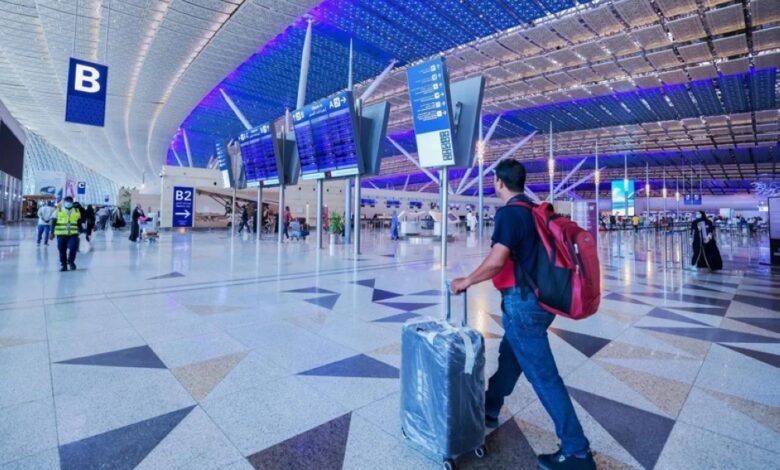

In a first for Saudi Arabia, King Abdulaziz International Airport in Jeddah has announced the activation of Intersection Take-off operations on all three of its runways. This achievement follows the airport's official accreditation by the General Authority of Civil Aviation, reflecting its commitment to implementing the highest international standards of safety and operational efficiency.
What is cross-take?
The crossover takeoff system is an advanced operational solution in the aviation industry, allowing aircraft to initiate takeoff from runway intersections instead of traditional starts, based on precise calculations of aircraft performance and available runway length. Approval for this procedure followed King Abdulaziz International Airport's fulfillment of all national and international safety requirements and confirmation of its technical and operational readiness to handle this advanced air traffic pattern.
The importance of this step in the context of Vision 2030
This procedure is not just a technical update, but is at the heart of the objectives of the National Transport and Logistics Strategy stemming from the Kingdom’s Vision 2030. The Saudi aviation sector seeks to increase the capacity of airports and raise the number of passengers to 330 million passengers by 2030. Cross-take directly contributes to enhancing the flow of traffic at King Abdulaziz Airport, which is the main gateway to the Two Holy Mosques and a global logistics hub connecting three continents.
6 operational and environmental features
Implementing this system achieves a range of strategic benefits, which can be summarized in the following points:
- Improving operational efficiency: through optimal utilization of airport infrastructure and increasing the number of flights that can be served simultaneously.
- Reducing ground movement time: This reduces the distance and time the aircraft travels to reach the takeoff point, thus speeding up the pace of operations.
- Reducing congestion: It helps to alleviate bottlenecks in aircraft taxiways, especially during peak times and Hajj and Umrah seasons.
- Improving the passenger experience: Reducing waiting times inside the aircraft before takeoff positively impacts passenger satisfaction and flight punctuality.
- Environmental sustainability: Reducing engine operating time on the ground significantly reduces aircraft fuel consumption.
- Reducing carbon emissions: This measure is in line with Saudi green initiatives and international commitments to reduce the carbon footprint of the aviation sector.
Thus, King Abdulaziz International Airport consolidates its position as one of the most advanced airports in the region, confirming its leadership in adopting smart solutions that balance economic efficiency and environmental responsibility.