King Abdulaziz University and Tarahum: A partnership to empower prisoners' families

In a move reflecting the commitment of major academic institutions to their national and societal responsibilities, King Abdulaziz University and the National Committee for the Care of Prisoners, Released Prisoners and Their Families “Tarahum” in Jeddah Governorate signed a strategic partnership agreement aimed at bringing about a qualitative shift in the mechanisms for supporting and rehabilitating the beneficiary groups, and transforming them from a state of need to horizons of production and independence.
Enhancing integration between the academic and non-profit sectors
This agreement comes within the context of a broad development drive in the Kingdom of Saudi Arabia, aimed at empowering the non-profit sector and increasing its contribution to the GDP, in line with the objectives of Vision 2030. Universities play a pivotal role in this context, not only as centers of learning but also as engines of social development, harnessing their research and human resources to serve pressing societal issues, foremost among them the care of the most vulnerable groups and their integration into the national fabric.
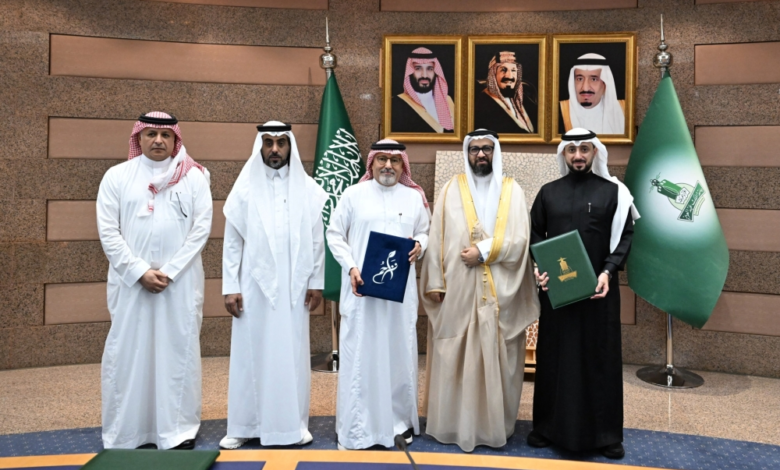
The signing ceremony took place at the university headquarters, with Dr. Mohammed Kabli, Vice President for Academic Affairs, representing the academic side, and Engineer Fouad Al-Shuraibi, Chairman of the Board of Directors of the "Tarham" Committee, representing the committee. This memorandum establishes a sustainable, practical model that focuses on finding fundamental solutions to the problems faced by prisoners' families, rather than relying solely on traditional welfare programs.
Economic empowerment and innovative research solutions
Under this partnership, efforts will be combined to integrate academic and economic expertise to create a supportive environment for prisoners, released inmates, and their families. The collaboration will focus intensively on:
- Supporting productive families: The university provides its various outlets and events for marketing the products of prisoners’ families, thus providing them with a sustainable income and preserving their dignity.
- Targeted scientific research: Conducting in-depth studies on the psychological and social effects of the absence of a family member due to imprisonment, which helps decision-makers design intervention programs based on accurate scientific evidence.
- Preparing for the labor market: Designing training programs that keep pace with the requirements of the modern market for the children of prisoners, to ensure that they obtain job opportunities that give them future security.
Developing staff and exchanging experiences
The agreement also addressed institutional development, with the university providing specialized workshops to enhance the administrative and psychological skills of the "Tarham" committee members, enabling them to better serve this vulnerable group. In return, the committee will offer university students field training opportunities, connecting their graduation projects to real-world issues that align with the committee's objectives, thus reinforcing the concept of "service learning" among students.
Social and security dimensions
This initiative has dimensions that go beyond material support; as integrating the families of prisoners and released prisoners into society contributes to strengthening security and social stability, reduces the chances of recidivism, and enhances the mental health of children, making this partnership a model to be emulated in the integration between governmental and charitable sectors to serve humanity and develop the place.