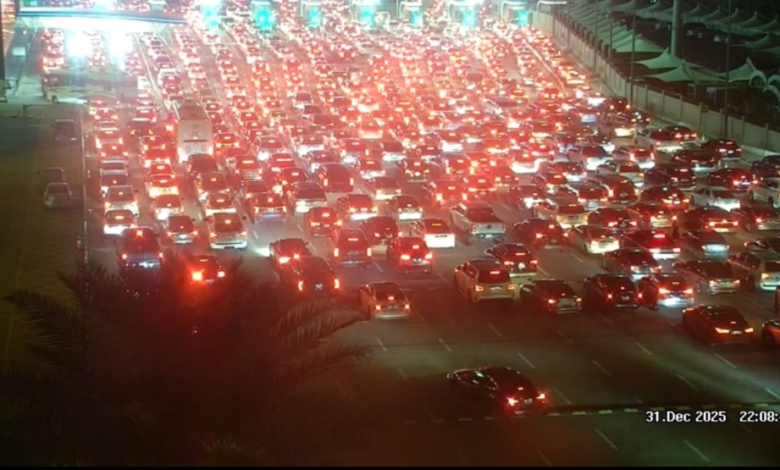
King Fahd Causeway traffic jam: Crossing time reaches 69 minutes and traffic congestion

The King Fahd Causeway, the vital link between Saudi Arabia and Bahrain, experienced heavy traffic congestion today, with updated data indicating crossing times of up to 69 minutes. This congestion comes at a time when the bridge is experiencing a constant flow of travelers, prompting drivers to be advised to exercise caution and expect longer than usual waiting times.
A vital artery and a rich history
The King Fahd Causeway is more than just a crossing point; it's a symbol of the deep-rooted fraternal ties between the two brotherly nations. Officially opened in 1986, the bridge spans approximately 25 kilometers and is one of the longest international bridges in the world. Since its construction, the bridge has dramatically enhanced social connections and economic growth, facilitating travel that was previously limited to air or sea routes. A distinctive feature of the bridge is its artificial central island, which serves as a rest stop and customs terminal, and is itself a unique engineering achievement in the region.
Economic and touristic importance
Traffic updates on the King Fahd Causeway are of paramount importance to a wide segment of citizens and residents, given the bridge's pivotal role in trade and tourism. The causeway is the only land crossing connecting Bahrain to the outside world, and goods and products flow across it daily, making it a cornerstone of the Gulf economy. From a tourism perspective, weekends and official holidays witness a massive influx of visitors, with Saudis traveling to Bahrain for leisure and tourism, while Bahrainis visit the Kingdom for shopping and to visit holy and tourist sites, which explains the frequent traffic congestion during peak hours.
Organizational and technical efforts
The King Fahd Causeway Authority is continuously working to develop its infrastructure and technology to facilitate traffic flow. Recent years have seen the launch of automated payment gateways and smartphone applications that allow travelers to check their expected crossing times and bridge status before proceeding. Despite these significant efforts to expedite customs and passport procedures, the large volume of traffic at specific times can still lead to delays, which today reached 69 minutes.
Experts and relevant authorities always advise travelers to follow the official accounts of the organization and use the applications designed to plan their trips during times when traffic density is low, in order to ensure a smooth and safe journey and avoid long waiting times.