King Fahd Causeway congestion: Fingerprinting requirement increases crossing time for travelers

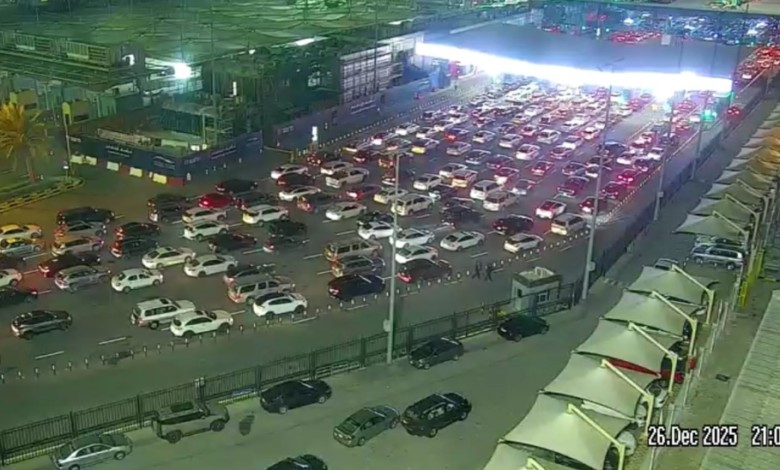
The King Fahd Causeway witnessed unprecedented traffic congestion and significant delays on Friday, coinciding with the implementation of new regulations at the passport control area. This congestion led to increased waiting times for travelers in both directions, prompting operational authorities to mobilize efforts to ensure the smoothest possible flow of traffic.
Causes of traffic congestion and new procedures
Field sources and eyewitnesses attributed the slow traffic to the implementation of biometric verification requirements, which necessitate taking the fingerprints of every traveler passing through passport control, without exception. Previously, the procedure was sometimes limited to the vehicle's driver or holders of specific documents, but the current rigorous routine requires matching the data of all passengers using the updated fingerprint scanners, resulting in a significant increase in processing time for each vehicle.
Adding to the congestion, this measure coincided with the conversion of the “students’ lane” to serve the incoming traffic to Saudi Arabia, with the aim of accommodating the human flow, which led to the integration of departing travelers’ traffic into the regular lanes and increased pressure on them, as field monitorings observed long queues of vehicles in front of the areas where procedures are completed.
The strategic importance of the King Fahd Causeway
The King Fahd Causeway, officially opened in 1986, is a vital artery and a cornerstone of economic and social relations between Saudi Arabia and Bahrain. As the only land crossing connecting Bahrain to the outside world, it typically experiences a massive influx of travelers, especially during weekends and peak tourist seasons. The newly implemented security and regulatory measures are designed to ensure data accuracy and passenger safety, despite their temporary impact on crossing speed.
Current transit times and digital solutions
Real-time monitoring indicates that the average processing time has jumped to between 32 and 40 minutes, rates that are likely to increase depending on the number of passengers in each vehicle. Passport and customs officers are currently working at full capacity to handle this influx and attempt to balance security measures with speed of processing.
The relevant authorities advise travelers to take advantage of the available digital services, specifically the “Jisr” application, which provides real-time data on traffic congestion and estimated crossing times, helping travelers to plan their trips and choose less crowded times to avoid peak periods.