King Fahd Causeway traffic: 44-minute crossing time and solutions via Nafath

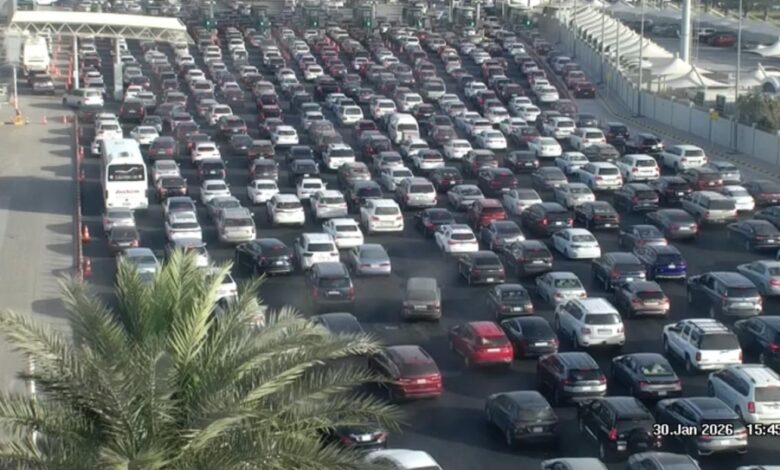
The King Fahd Causeway, the vital artery linking Saudi Arabia and Bahrain, is experiencing heavy traffic and significant congestion in both directions today, Friday. This congestion coincides with the peak travel season for weekend getaways, resulting in slower traffic flow and significantly higher waiting times, which operators have described as "high.".
The control and monitoring rooms at the King Fahd Causeway Authority recorded an increase in the average crossing time in the procedures area towards the Kingdom of Bahrain, reaching 44 minutes, a time exceeding the usual rates on normal days. Conversely, the return journey towards the Kingdom of Saudi Arabia recorded a similar time of 42 minutes, reflecting the large volume of people during the peak hours of this holiday and the increased desire to travel between the two countries.
Causes of congestion and technical solutions
The usual traffic congestion was exacerbated by the implementation of new security measures requiring manual fingerprinting of each traveler. This presented an additional logistical challenge, with long queues of vehicles crowding the waiting areas and negatively impacting the desired traffic flow. In response, the relevant authorities acted swiftly to alleviate the pressure by activating the "Spatial Verification" service through the government's "Nafath" application. This smart technological solution allows travelers to complete their biometric fingerprinting digitally via their personal phones, bypassing the delays of traditional manual scanning and thus contributing to faster processing times.
The strategic importance of the King Fahd Causeway
This congestion is not a passing event, but rather reflects the immense strategic importance of the King Fahd Causeway, which was officially opened in 1986. Stretching 25 kilometers, the causeway is considered one of the most significant infrastructure achievements in the region, embodying the deep fraternal ties between the Kingdom of Saudi Arabia and the Kingdom of Bahrain. For decades, the causeway has played a pivotal role in strengthening social and Gulf unity, facilitating the movement of citizens and residents, and serving as a successful model for joint infrastructure projects within the Gulf Cooperation Council.
Economic and tourism dimension
Economically, the causeway is a vital artery for trade and tourism; large sectors in Bahrain and the Eastern Province of Saudi Arabia rely on the weekly influx of visitors. Economic experts point out that smooth traffic flow across the causeway is directly linked to increased tourist spending and higher occupancy rates at hotels and entertainment venues in Manama. Therefore, any delay in crossing time can affect, even temporarily, travelers' short-term tourism plans, making technological solutions like "Nafath" an economic necessity, not merely a regulatory measure.
Digital transformation at border crossings
The development of the "Nafath" application comes as an immediate response to the demands of high traffic volume and aligns with the Kingdom's Vision 2030 to digitize government services and improve quality of life. These measures aim to reduce long waiting times for travelers and ensure the smooth flow of traffic at this vital land border crossing, underscoring the commitment of relevant authorities to leveraging technology to serve travelers and facilitate cross-border travel procedures.