
In a significant and pivotal development reflecting the accelerating events in the Middle East, US Secretary of State Marco Rubio revealed crucial details regarding the timeline for ending operations in Iran. These statements shed light on the current US strategy and the anticipated outcomes of the ongoing conflict, which has profound repercussions on both the regional and international stages.
Details of the US plan to end operations in Iran
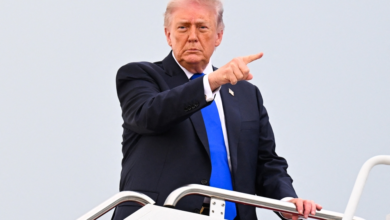
US Secretary of State Marco Rubio announced on Friday that the US administration in Washington expects to achieve all its military and strategic objectives in Iran within the next two weeks. Speaking to reporters after the conclusion of the G7 summit near Paris, Rubio affirmed that this timeline would be met regardless of the decision regarding the deployment of US ground troops to Iran.
Rubio emphasized the anticipated impact of these operations, stating unequivocally, "When we finish them off in the next two weeks, they will be at their weakest point in modern history." This statement reflects the extent of the military and economic pressure exerted by the United States and its allies to curtail Iranian capabilities.
The historical context of US-Iranian tensions
To understand the dimensions of this escalation, one must consider the long historical context of tensions between Washington and Tehran, stretching back decades to 1979. Relations have witnessed major escalations, most notably the ongoing disputes over Iran's nuclear program, its ballistic missile development, and its influence in the Middle East. These accumulated tensions, coupled with crippling economic sanctions, brought matters to the brink of direct confrontation, making the declaration of an end to military operations in Iran a historic turning point that could redraw the map of alliances and power dynamics in the region.
Diplomatic track and exchange of messages
Despite the rhetoric of military escalation, the door to diplomacy has not been completely closed. Marco Rubio explained that Tehran has not yet provided an official response to the proposed plan to end the war. However, he noted that there is some discreet diplomatic activity underway, with Iran sending messages and signals indicating its interest in a diplomatic solution.
Rubio added, explaining the nature of these contacts: “We haven’t received a final answer yet, but we have exchanged messages and signals from the Iranian regime—or what remains of it—regarding a willingness to talk about certain things.” This exchange reflects last-minute attempts to avert total collapse and find a political way out of the crisis.
Expected regional and international impacts
The repercussions of ending operations in Iran will not be confined to Iran alone, but will extend to the region and the world. Regionally, weakening Iranian capabilities is expected to fundamentally alter the balance of power in the Middle East, potentially impacting the security of the Arabian Gulf and international maritime navigation, as well as reducing logistical and financial support for armed groups in the region.
On the international level, regional stability has a direct impact on global energy markets and the international economy. Furthermore, US coordination with the G7 countries underscores a Western consensus on managing the post-military operations phase, ensuring that no security vacuum emerges that could be exploited by other international powers.
In conclusion, political and international circles are watching closely what the next few days will bring, as the region stands on the threshold of a new phase that may end decades of tension, or open the door to a completely new geopolitical reality.