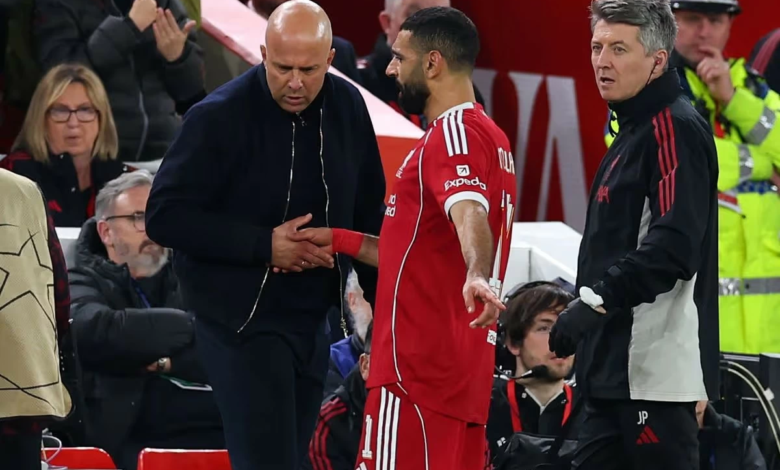
The reason for Mohamed Salah's substitution against Galatasaray and Slout's statements

Introduction: A dramatic night in the Champions League
Liverpool manager Arne Sloat has revealed the details and the real reason behind Mohamed Salah's request to be substituted during the crucial Champions League match against Galatasaray. This match was the second leg of the Round of 16, a competition in which the "Egyptian Pharaoh" has consistently shone, forging a remarkable history with the Reds and becoming the club's all-time leading scorer in European competitions.
Match details: From a missed penalty to a phenomenal goal
The match was a dramatic and unpredictable affair for Liverpool's star player. In a nail-biting moment, Mohamed Salah missed a penalty just before halftime, a rare occurrence for a player of his experience. However, true to form, displaying exceptional mental fortitude, Salah refused to be discouraged. He returned in the second half, making amends with a brilliant goal in the 62nd minute. Following this stunning performance, and with about 15 minutes remaining, Salah was substituted, with Dutch striker Cody Gakpo coming on in his place.
The real reason behind Mohamed Salah's substitution
Mohamed Salah's early substitution sparked numerous questions among fans and sports analysts. In official statements published on Liverpool's website, manager Arne Slott addressed the speculation, saying: "I don't believe Salah asked to be substituted simply because he'd scored enough goals. The reality is that he felt something, perhaps a muscle discomfort or a minor injury. Therefore, we preferred not to risk him, and we'll wait for the medical assessment to see how he'll be at the end of the week and beyond." This statement highlights Salah's importance to Liverpool's tactical system and the coaching staff's concern for his well-being as they compete for domestic and continental titles.
The coach praised the Egyptian Pharaoh's mental strength
Slot didn't miss the opportunity to praise Salah's stunning goal against Galatasaray, emphasizing that it reflected the player's exceptional technical and mental abilities. The coach added, "What Salah did demonstrates his extraordinary capabilities. After missing a penalty at a crucial moment, he came back to score such a magnificent goal. Overcoming such a situation would be incredibly difficult for any player, so we congratulate the team on their strong performance in the second half, especially considering the numerous setbacks we've faced this season and the many chances we've missed.".
Slot concluded by saying: “Salah showed great fighting spirit; he delivered a superb assist, then skillfully dribbled into the penalty area and expertly placed the ball into the top corner of the goal. This performance demonstrates his unwavering mental strength and also underscores the strength of character of the team as a whole.”.
Historical context and Mohamed Salah's impact locally and internationally
Any potential injury to Mohamed Salah is a source of concern not only for English fans in Liverpool, but also for millions of fans in Egypt and the Arab world (regionally and internationally), given his significant impact on the Egyptian national team's chances in upcoming competitions. Domestically, Liverpool relies almost entirely on Salah's goals and assists to fiercely compete for the English Premier League title.
Overcoming the bench crisis and proving oneself
It's worth noting that Salah experienced a brief period of tension with manager Arne Slott last December due to being benched in some matches. However, thanks to his high level of professionalism and consistent performance, the Egyptian star quickly regained his starting position, proving once again that he is Liverpool's most prominent and indispensable player.