Trump insists on annexing Greenland: a diplomatic crisis and strategic dimensions

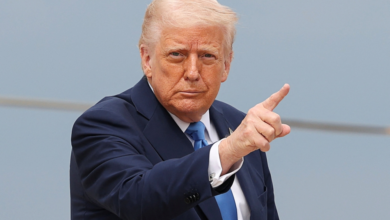
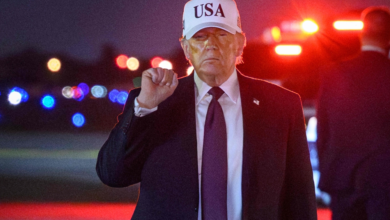
US President Donald Trump reiterated his insistence on the need for the United States to control Greenland, considering it a fundamental pillar of US "national security," in statements he made from his residence in Palm Beach, Florida, ignoring the wave of diplomatic anger issued by the Danish government and the authorities of the self-governing island.
Security concerns and fears of Russian and Chinese expansion
At a press conference on Monday, Trump explained that his interest in the island stemmed not only from its natural resources but primarily from the growing security risks in the Arctic region. "We need Greenland for national security, not just minerals," Trump said, adding, in reference to the escalating geopolitical competition, "If you look at Greenland, along its coastline, you see Russian and Chinese ships everywhere." The US president asserted decisively, "We have to have it.".
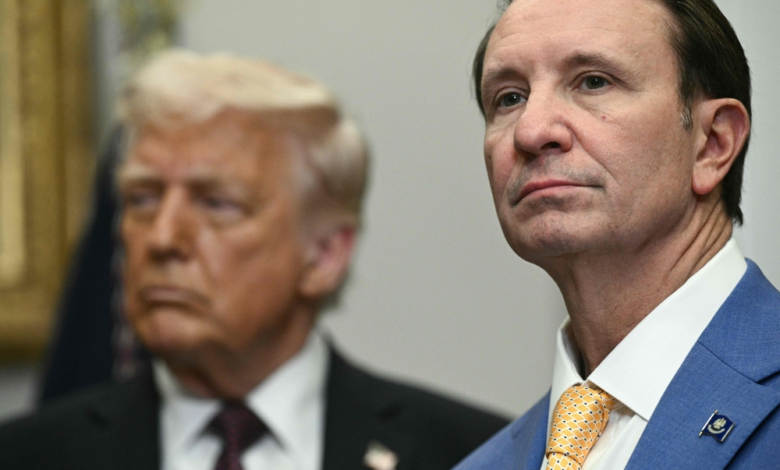
These statements reinforce an unprecedented move by Trump on Sunday, in which he appointed Louisiana's Republican governor, Jeff Landry, as a special envoy to Greenland, on a mission explicitly aimed at making the island "part of the United States," which Landry expressed in a post in which he considered the mission "an honor to serve the country.".
Angry reactions and adherence to international law
Washington's moves provoked strong reactions in Copenhagen and Nuuk (the capital of Greenland). Denmark summoned the US ambassador to protest, and Danish Prime Minister Mette Frederiksen and Greenland's Prime Minister Jens-Fredrik Nielsen issued a strongly worded joint statement, asserting that "national borders and state sovereignty are based on international law," stressing that "no other state can be annexed, even under the pretext of international security," and demanding respect for the territorial integrity of the Kingdom of Denmark.
Historical background and strategic importance of the island
The United States' interest in Greenland is not new; the island, situated between the Arctic and Atlantic Oceans, has been of paramount strategic importance to Washington since World War II. It hosts Thule Air Force Base (now Petavia Space Base), the northernmost U.S. military base, which plays a vital role in the ballistic missile early warning system and space surveillance.
Historically, the United States has attempted to purchase the island on several occasions; most notably, in 1946, President Harry Truman offered $100 million in gold, but Denmark rejected the offer. The renewed American interest in the last decade stems from the melting of Arctic ice, which opens new shipping lanes and facilitates access to vast natural resources, including rare earth minerals crucial to modern technological and military industries.
Potential geopolitical impacts
Observers believe that Trump's insistence on this issue could lead to long-term tensions within NATO, which unites the United States and Denmark. This approach also reflects a shift in US strategy toward greater militarization of the Arctic to counter the growing influence of both Russia, which possesses the world's largest icebreaking fleet, and China, which describes itself as a "near-Arctic state" and seeks an economic and strategic foothold in the region.