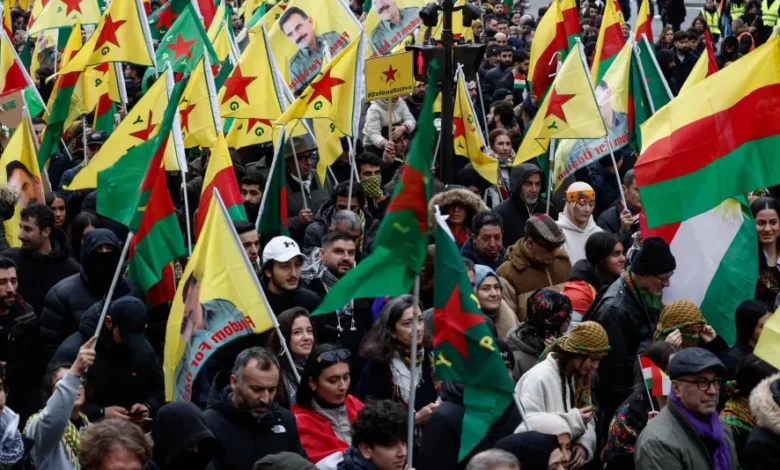
Kurdish protests in northern Syria and the Damascus agreement: full details

Thousands of Kurdish citizens took to the streets in mass demonstrations across northeastern Syria on the eve of the announcement of the implementation of a new agreement between the Syrian Democratic Forces (SDF) and the Syrian government in Damascus. These popular movements reflect the anxiety and anticipation prevailing among the Kurdish population and other communities in the region regarding the future of the Autonomous Administration and the nature of its new relationship with the central government.
General context and historical background
To understand the nature of these demonstrations, it is necessary to return to the historical context of the Syrian crisis. Since the outbreak of the conflict in 2011, government forces gradually withdrew from large areas in the north and northeast of the country, allowing the Kurds to establish their “self-administration” and build up military forces that played a pivotal role in the war against ISIS, with the support of the international coalition. With ongoing geopolitical shifts and repeated regional threats of ground military operations against these areas, the Kurdish leadership found itself compelled to open channels of dialogue with Damascus to protect its sovereign borders.
Details of popular concerns
The protesters' slogans revolve around several key points, most notably preserving the gains achieved by the self-administration during the past years, and ensuring that there is no return to the central security system that prevailed before 2011. Local residents fear that the deployment of the Syrian army in border areas and within major cities will undermine the authority of local councils and civil institutions that have been built, in addition to concerns related to forced conscription and arrests.
Strategic importance and impact of the agreement
This agreement, regardless of its precise details, holds major strategic importance at both the local and regional levels:
- Locally: The agreement represents a turning point in the Syrian military map, as it restores the Syrian army's foothold in areas rich in oil and agricultural resources that have been outside its control for years, which may contribute to alleviating economic crises if the resources are jointly invested.
- Regionally, the agreement primarily aims to remove pretexts for neighboring regional powers, particularly Turkey, which considers the armed Kurdish presence on its borders a threat to its national security. The presence of the official Syrian army on the border could alter the rules of engagement and international dynamics.
- Internationally: This rapprochement presents the United States and Russia with a new reality that requires rearranging understandings in the eastern Euphrates region, to ensure that no direct clash occurs between the various forces present in that narrow geographical area.
In conclusion, these demonstrations remain a clear message from the street in northeastern Syria that any political or military agreement must take into account the rights of local communities and ensure the stability of the region, moving away from purely security-based solutions.