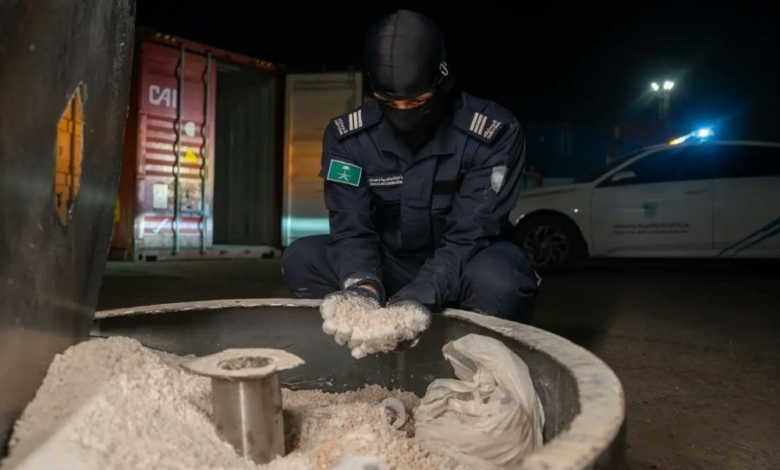
Saudi Interior Ministry foils drug smuggling operation by seizing a lab in Lebanon

In a preemptive strike that reflects the vigilance of the Saudi security services and the reach of their intelligence arm to protect the nation’s security from cross-border threats, the official spokesman for the Saudi Ministry of Interior announced the success of a joint security operation that resulted in the seizure of a drug manufacturing plant inside Lebanese territory.
The spokesperson explained that the operation was based on precise and documented information provided by the Saudi Ministry of Interior to its counterparts in the Lebanese Republic. This information enabled the Lebanese authorities to raid the targeted location, where they discovered a fully equipped drug manufacturing facility, along with large quantities of materials used as precursor chemicals in drug production. They also seized firearms in the possession of the criminal elements operating from this hideout.
Preemptive strike strategy and the war on drugs
This operation comes within the context of the "war on drugs" that Saudi Arabia is waging resolutely and forcefully. Security forces are not content with apprehending smugglers at the borders or within the country, but are also pursuing a strategy of "preemptive strikes" by tracking down manufacturing and smuggling sources in the countries of origin. This security cooperation is tangible proof of the Kingdom's ability to detect criminal plots aimed at flooding the region with drugs and to dismantle international networks before they can export their poison.
The importance of regional security cooperation
Security experts indicate that the seizure of this factory represents a significant turning point in security cooperation between Riyadh and Beirut, particularly in the fight against drugs, a long-standing security concern for the region. This operation underscores that intelligence sharing is the most effective weapon against organized crime gangs that attempt to exploit regional circumstances to carry out their operations. This achievement also reflects the Kingdom's commitment to supporting the stability of its sister nations and assisting them in asserting their security sovereignty and preventing their territories from being used as platforms to target neighboring countries.
Protecting society and youth
In closing, the security spokesperson commended the positive and fruitful cooperation with Lebanese authorities in tracking and seizing these substances. He emphasized that the Saudi Ministry of Interior remains steadfast in its efforts to monitor and pursue all criminal activities targeting the Kingdom's security and its youth with drugs. He affirmed that the Kingdom will not hesitate to combat this scourge, thwart smuggling attempts by all means, and apprehend those involved, whoever they may be and wherever they may be, to ensure a safe and drug-free society.