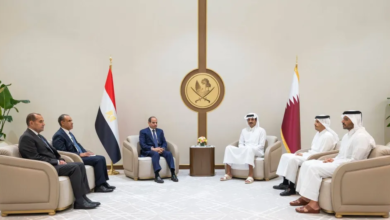

The Kuwaiti political scene witnessed a significant announcement regarding a broad cabinet reshuffle, a move aimed at injecting new blood into the executive branch and addressing the current challenges facing the country. This reshuffle comes at a sensitive time, requiring concerted efforts from various state institutions to achieve political stability and drive development. The move reflects the political leadership's desire to improve government performance and resolve outstanding issues.
Political context and historical background
Kuwaiti political life is characterized by its dynamism and continuous interaction between the legislative (National Assembly) and executive (government) branches. Over the years, Kuwait has witnessed several government changes and cabinet reshuffles, often aimed at breaking political deadlocks or responding to reform demands. The frequency of these cabinet reshuffles reflects the nature of Kuwait's democratic process, where decision-makers constantly strive to form a government capable of gaining the confidence of both Parliament and the Kuwaiti public, and of overcoming obstacles that might hinder development projects.
The importance of the amendment and its expected impact
This cabinet reshuffle is of paramount importance given the magnitude of the economic and social issues awaiting resolution. Domestically, citizens are anticipating fundamental solutions to housing problems, improvements to healthcare and education services, as well as combating corruption and enhancing transparency. Economically, the new government is tasked with accelerating the implementation of "Kuwait Vision 2035," which aims to transform Kuwait into a regional and global financial and commercial hub and reduce its over-reliance on oil as the sole source of income by diversifying the economy.
Regional and international dimensions
The impact of governmental stability in Kuwait extends beyond domestic affairs to encompass the regional and international spheres. Kuwait plays a pivotal role within the Gulf Cooperation Council and is considered a trusted diplomatic mediator in resolving regional conflicts. Therefore, a strong and stable government enhances Kuwait's ability to maintain its active diplomatic role and reassures foreign investors and international partners about the stability of the country's economic and political environment, thereby contributing to attracting foreign direct investment and strengthening strategic partnerships.
In conclusion, this cabinet reshuffle represents a new opportunity to rearrange the cards and define national priorities, amidst widespread popular hopes that the new formation will succeed in fulfilling the aspirations of citizens and consolidating the principle of constructive cooperation between the two authorities.