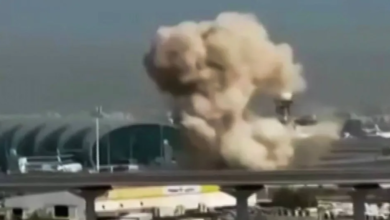
The Kuwaiti army intercepts hostile aerial targets to protect the country's security

Kuwaiti security and defense authorities announced the successful interception by the air defense system of hostile aerial targets that attempted to penetrate Kuwaiti airspace. This significant development comes amidst escalating regional tensions in the Middle East, clearly demonstrating the high level of efficiency and combat readiness of the Kuwaiti military in protecting the country's sovereignty and the security of its citizens and residents from any potential external threats.
Kuwaiti military readiness and air defense system
Kuwait possesses one of the most advanced and sophisticated air defense systems in the region, relying heavily on advanced American Patriot missile batteries, in addition to a complex network of early warning radars covering all its land and sea borders. The successful interception of any hostile aerial targets, whether drones or ballistic missiles, reflects the massive investments the Kuwaiti government has made in modernizing its military arsenal. The Kuwaiti armed forces operate around the clock to monitor any suspicious movements in the airspace and activate immediate engagement protocols to neutralize any threat before it reaches its vital targets.
General context and historical background of regional tensions
Historically, Kuwait is situated in a geographically strategically vital region, yet it is also surrounded by a highly complex geopolitical environment. Since the liberation of Kuwait in 1991, the Kuwaiti leadership has recognized the importance of building a strong national army capable of protecting national gains and providing strategic deterrence. In recent years, the Arabian Gulf region has witnessed a significant escalation in unconventional aerial threats, particularly with the proliferation of drone and guided missile technology among various armed actors in the region. This historical and contemporary context explains the constant state of alert and ongoing joint exercises that Kuwait conducts with its international and regional allies, most notably the United States and the Gulf Cooperation Council (GCC) countries, to ensure absolute air superiority and defensive capabilities.
Strategic importance and expected impact of the event
Domestically, the success of Kuwaiti air defenses in intercepting hostile targets sends a strong message of reassurance to the Kuwaiti public, affirming the ability of state institutions to secure the home front and protect vital installations, particularly oil refineries, oil fields, power generation plants, and desalination facilities. Regionally, this event underscores the cohesion and strength of the security system of the Gulf Cooperation Council (GCC) states, as Kuwait's security is considered an integral part of the security of the Arabian Gulf as a whole.
Internationally, the event carries significant economic and political dimensions. Kuwait is a major global oil exporter and an active and influential member of OPEC, and any threat to its security could have a direct and immediate impact on the stability of global energy markets and supply chains. Furthermore, Kuwait hosts vital US military bases and plays a pivotal role in supporting international peace efforts, making its stability a paramount international interest. A decisive response to these aerial targets demonstrates to the international community that Kuwait is a reliable security partner, capable of maintaining stability in one of the world's most strategically important regions.