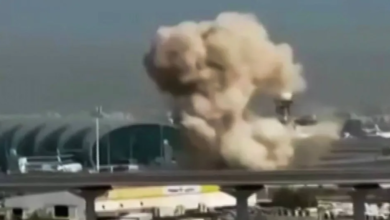
Kuwait responds to missile attack: Details of defense and security preparedness

Kuwaiti security and military sources announced the successful interception of a missile attack by air defense systems that penetrated the country's airspace. This incident highlights the high level of readiness of the Kuwaiti armed forces in protecting national security. This development comes at a time of geopolitical instability in the region, requiring constant vigilance to ensure the stability and safety of Kuwaiti territory.
The efficiency of the Kuwaiti air defense system
The Kuwaiti army relies on one of the world's most advanced air defense systems to protect its airspace, most notably the American-made Patriot system, specifically the upgraded PAC-3 variant, which is capable of intercepting ballistic and cruise missiles with high precision. These systems operate in conjunction with a sophisticated radar network covering all land and sea borders, giving the military command the ability to provide early warning and immediate action against any hostile aircraft before they reach vital targets or populated areas.
The historical context of missile threats
This type of challenge is not entirely new to Kuwait; the country has faced real tests of its defense capabilities in the past, most notably during the 2003 liberation of Iraq. During that time, the Patriot missile batteries deployed in Kuwait successfully intercepted and destroyed a series of Iraqi missiles (such as Silkworm and Ababil missiles) targeting the north of the country and the capital, thus sparing Kuwait significant human and material losses. This historical legacy has reinforced the Kuwaiti military doctrine, which places "airspace security" as a top priority within its national defense strategy.
Strategic importance and regional security
Countering this attack carries strategic implications that extend far beyond Kuwait's geographical borders. Kuwait lies at the heart of the Arabian Gulf region and is a vital corridor for global energy, home to major oil ports and refineries of paramount importance to the global economy. Therefore, any threat to Kuwaiti airspace is internationally interpreted as a threat to global energy security, necessitating high-level security coordination with international allies, foremost among them the United States and the Gulf Cooperation Council (GCC) states, to ensure the continued safe flow of air and sea traffic.
Political and military messages
The successful interception sends a strong deterrent message: Kuwaiti airspace is a red line, and the massive investments the state has made in modernizing its military arsenal and training its national personnel have paid off. This event also reinforces the confidence of citizens and residents in the military's ability to handle emergencies and crises efficiently and effectively, amidst a regional environment rife with conflict.