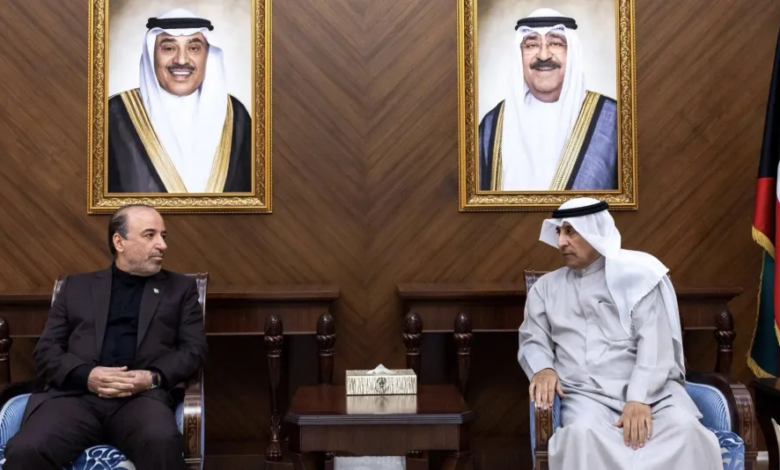

Kuwait summons the Iranian ambassador and hands over an official protest note
In a firm diplomatic move, the Kuwaiti Ministry of Foreign Affairs announced the summoning of the Iranian ambassador to Kuwait to deliver a strongly worded official protest note. The note included a clear and explicit Kuwaiti demand for an immediate cessation of all hostile actions that threaten the security and stability of the region, and for adherence to the principles of good neighborliness and respect for the sovereignty of states.
General context and historical background of Kuwaiti-Iranian relations
Relations between Kuwait and Iran are characterized by historical and geopolitical complexities linked to the security of the Arabian Gulf. For decades, Kuwait has consistently sought to play a mediating role in regional affairs and advocate for diplomatic dialogue to resolve disputes. However, bilateral relations have experienced periods of tension, often related to security issues or maritime boundary disputes, such as the ongoing conflict over the Dorra gas field, over which both Kuwait and Saudi Arabia assert their exclusive rights. The summoning of the Iranian ambassador reflects Kuwait's unwavering commitment to defending its national interests and territorial sovereignty against any transgressions or interference in its internal affairs or those of neighboring states.
The importance of the event and its regional impact on the Gulf Cooperation Council countries
This diplomatic development carries significant regional importance, coming at a time when the Middle East is facing escalating security challenges. Kuwait's move aligns with the unified stance of the Gulf Cooperation Council (GCC) states, which categorically rejects any external interference in the internal affairs of member states. Gulf solidarity is a cornerstone in confronting any hostile acts and sends a clear message that Gulf security is indivisible. This step also reinforces regional efforts to establish clear parameters for dealing with Tehran, based on respect for international laws and conventions, and a cessation of support for militias or any destabilizing activities.
International repercussions and their impact on the stability of global markets
Internationally, the security and stability of the Arabian Gulf region are of paramount importance to major powers and the international community as a whole. The region is a vital artery for global energy supplies, and any escalation or hostilities there could have serious repercussions for global oil and gas markets, as well as threaten the safety of maritime navigation in the Strait of Hormuz and other strategic waterways. Therefore, Kuwait's diplomatic move resonates internationally, as the international community supports the steps taken by states to protect their sovereignty through diplomatic and legal means. Through this summons, Kuwait reaffirms its commitment to international law and the UN Charter, which rejects the use of force or the threat of force in international relations.
Summary and future prospects
In conclusion, Kuwait's summoning of the Iranian ambassador and its demand for a cessation of hostilities represent a sovereign stance reflecting the Kuwaiti leadership's commitment to protecting its national security. Hope remains pinned on prioritizing reason and diplomatic dialogue to overcome crises and build regional relations based on mutual respect and shared interests, far removed from policies of escalation and tension that do not serve the peoples of the region.