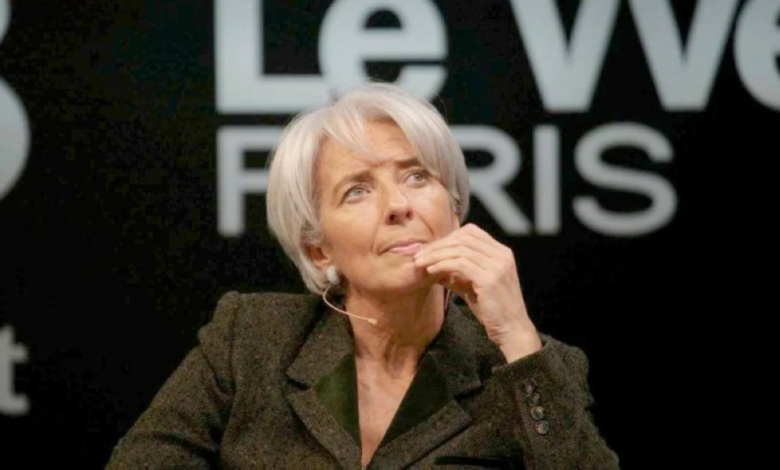

European Central Bank President Christine Lagarde warned that the global economy is going through a critical phase characterized by unprecedented fragmentation in the geopolitical landscape, coupled with rising protectionist tendencies, increased tariffs, and restrictions on international trade.
Lagarde's remarks came during her participation in a panel discussion at the World Economic Forum in Davos, entitled "Déjà Vu of History," where she highlighted the radical transformations that are reshaping the global economic system.
Back to the 1920s
In a striking historical analogy, Lagarde asked, “Are we reliving the 1920s?” She pointed to the parallels between the current era and that period, which witnessed tremendous technological breakthroughs and strong stock market performance, but ended in major economic turmoil. She explained that the world is currently experiencing a similar acceleration in the digitalization of economies, with a particular focus on the artificial intelligence revolution that is driving the current landscape.
The European official stressed that maximizing the benefits of artificial intelligence technologies requires close international cooperation and acceptance of multiple models and visions of the world, rather than isolation and zero-sum competition that could hinder technological and economic progress.
A new international order and European challenges
Speaking about Europe, Lagarde stressed that the European economy urgently needs a "radical overhaul" to withstand what she described as "the dawn of a new international order." This statement comes at a time when Europe faces geopolitical and economic challenges that necessitate a rethinking of its competitive strategies.
She pointed out that strengthening Europe's power lies in deepening the single market and removing non-tariff trade barriers between member states, which will contribute to raising economic efficiency and enhancing the ability to confront other economic blocs.
Concerns about tariffs and inflation
Regarding monetary policy and the potential impact of US policies, Lagarde, in an interview with French radio station RTL, downplayed concerns about the inflationary effect of tariffs that the United States might impose. She expressed her expectation that the impact would be slight and limited, citing the European Central Bank's success in curbing inflation and keeping it at 1.9%, close to its official target.
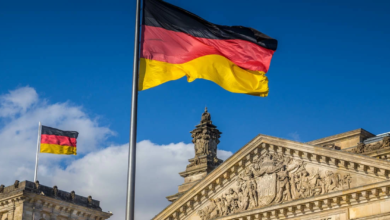
In analyzing the impact of these tariffs on European countries, Lagarde noted the varying effects expected, pointing out that Germany, as a major exporting power heavily reliant on foreign trade, would be more vulnerable to these tariffs than France, which is more dependent on domestic demand, reflecting the disparity in economic structures within the Eurozone.
These warnings come at a time when the world is shifting from open globalization to more closed policies, as major countries seek to secure their supply chains and protect their domestic industries, posing new challenges for international financial institutions to maintain financial stability and sustainable growth.