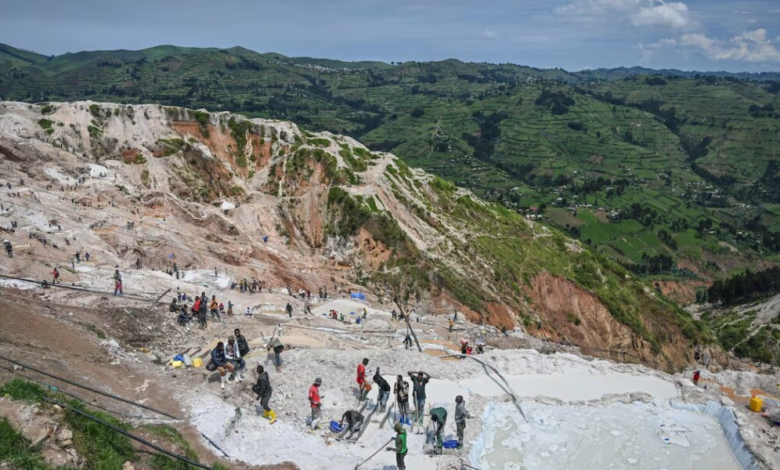

The government of the Democratic Republic of Congo, in an official statement, expressed grave concerns that at least 200 people may have been killed in a massive landslide that occurred Wednesday at the Rubaya mining site. This vital site is located in the east of the country, a region plagued by ongoing security unrest and currently controlled by the M23 rebel movement.
The strategic importance of the Rubaya mine
The Rupaia site is more than just an ordinary mine; it's a vital artery in the global minerals economy. It's estimated that this site alone produces between 15% and 30% of the world's total coltan output. Tantalum, an essential component in the manufacture of electronic capacitors used in smartphones, laptops, and game consoles, is extracted from this ore, making it a crucial element in global technology supply chains.
Background of the conflict and field control
The anti-government M23 (March 23 Movement) has controlled the Rubaya region since April 2024. The Congolese government and the United Nations accuse neighboring Rwanda of providing military and logistical support to the movement in order to plunder mineral resources in eastern Congo, an accusation Kigali consistently denies. This complex conflict has transformed mining areas into high-risk hotspots, where mineral revenues are often used to finance military operations, in what is internationally known as "conflict minerals.".
Working conditions and environmental hazards
This disaster highlights the tragic working conditions of miners in the Congo, known locally as "crouseurs." Mining operations are often carried out using rudimentary methods that lack even the most basic occupational safety standards, with workers digging deep tunnels into the fragile soil without adequate support. These risks are significantly exacerbated during the rainy season, when the soil becomes saturated and more prone to deadly landslides, turning the search for a livelihood into a perilous journey.
Local and international repercussions of the incident
This incident is expected to have repercussions beyond the tragic loss of life. Locally, it further complicates the already dire humanitarian situation in North Kivu province, which is overcrowded with internally displaced persons. Internationally, the halt or disruption of production at Rubaya could raise concerns in global markets about the stability of coltan supplies, potentially leading to volatility in the prices of this technological raw material, as well as renewed international calls for stricter controls on mineral supply chains originating from conflict zones.