The Saudi College of Mining at King Abdulaziz University was launched to support Vision 2030

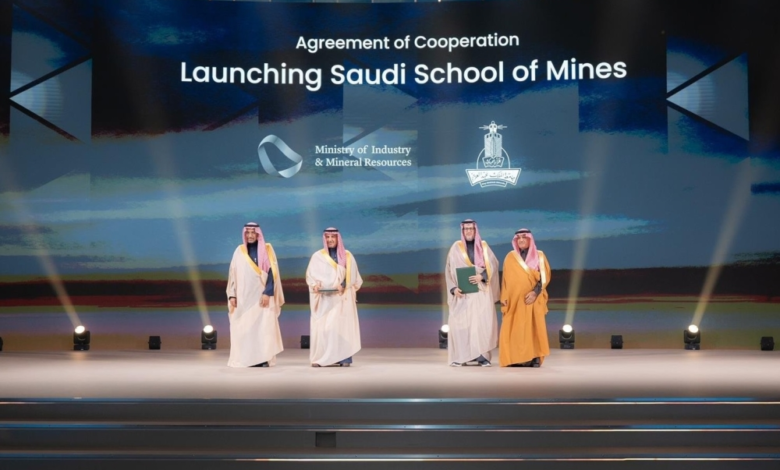
In a significant step aimed at strengthening Saudi Arabia's position as a global hub for mining industries, the fifth edition of the International Mining Conference witnessed the signing of a strategic agreement between the Ministry of Industry and Mineral Resources and King Abdulaziz University to establish the "Saudi College of Mining." This initiative will transform the university's College of Earth Sciences and Department of Mining Engineering into a world-class academic and research institution.
Strategic context and ambitious vision
This agreement gains its significance from the overall economic context of the Kingdom under Vision 2030, where the mining sector is considered the third pillar of national industry after oil, gas, and petrochemicals. The Kingdom seeks to exploit its mineral wealth, estimated at approximately 9.4 trillion riyals (2.5 trillion dollars), which necessitates a robust educational infrastructure capable of producing national talent to lead this transformation. The establishment of the college comes in response to the pressing need to bridge the gap between academic outputs and the growing demands of the labor market in this vital sector.
Details of the agreement and its global objectives
The signing ceremony took place in the presence of His Excellency the Minister of Industry and Mineral Resources, Mr. Bandar bin Ibrahim Al-Khorayef, and His Excellency the Minister of Education, Mr. Yousef bin Abdullah Al-Bunyan, with the two sides represented by His Excellency Engineer Khalid bin Saleh Al-Mudaifer, Deputy Minister of Industry for Mining Affairs, and the President of King Abdulaziz University, Dr. Tarif bin Yousef Al-Aama.
The agreement sets an ambitious goal of ranking the new college among the top five educational institutions globally in the fields of earth sciences and mining. To achieve this, work will focus on:
- Attracting global academic partners to transfer expertise and localize knowledge.
- A comprehensive restructuring of undergraduate and graduate programs.
- Aligning curricula with the latest technologies used in geological surveying, exploration and processing.
Investing in human capital
His Excellency the Minister of Industry and Mineral Resources, Mr. Bandar Al-Khorayef, affirmed that investing in human capital is the true guarantee for the sustainability of the mining sector. He pointed out that the college will play a pivotal role in graduating young leaders who possess the necessary skills to manage major mining projects, thus enhancing the Kingdom's international competitiveness.
For his part, His Excellency the Minister of Education, Professor Yousef Al-Bunyan, explained that the project embodies the concept of “productive education,” which links university outputs with direct investment opportunities, noting that this partnership comes within the framework of the “University Leadership” initiative and the Human Capability Development Program, to enhance the institutional identity of Saudi universities and raise the quality of their research and economic outputs.
Integration of the mining education and training system
This college is not an isolated initiative, but rather a link in a comprehensive chain of government efforts to develop the workforce in the sector. It follows the establishment of the Saudi Mining Technical Institute in Arar, support for the National Academy of Minerals in Yanbu, and strategic partnerships with King Fahd University of Petroleum and Minerals. Engineer Khalid Al-Mudaifer explained that the new college will build upon the rich legacy of the College of Earth Sciences at King Abdulaziz University, the first of its kind in the region, while incorporating the latest international standards.
Future prospects and scientific research
The President of King Abdulaziz University, Dr. Tarif Al-Aama, affirmed the university's commitment to leading a comprehensive academic and research transformation. The next phase will focus on attracting a select group of international researchers and providing an innovative environment that addresses the technological and environmental challenges facing the sector. This will contribute to strengthening local content and building a knowledge-based economy, ensuring the graduation of a generation capable of competing in global markets.