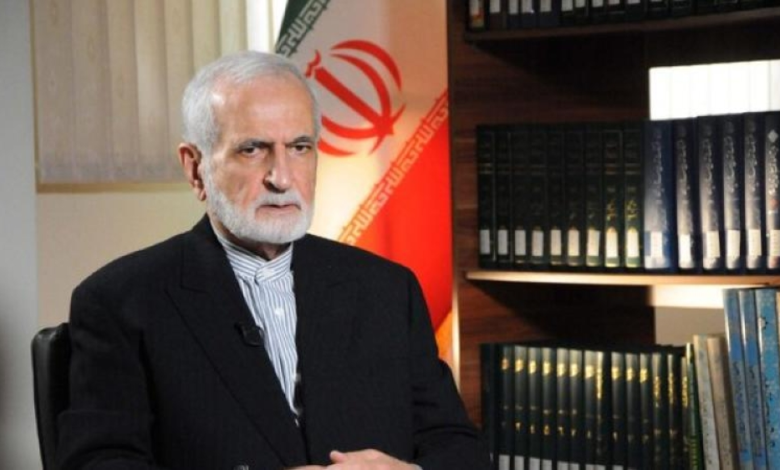
The assassination of Kamal Kharrazi, head of the Iranian Council on Foreign Relations

Details of Kamal Kharrazi's murder in Tehran
Iran's official news agency reported in a breaking news bulletin the death of Kamal Kharrazi, head of the Iranian Strategic Council on Foreign Relations, from serious injuries sustained in a direct attack on his residence in Tehran several days ago. Saudi Arabia's Al-Ekhbariya channel confirmed the news via its official accounts, noting that this event represents a highly significant security and political development within Iran, opening the door to multiple scenarios regarding the perpetrators and their true motives.
Who is Kamal Kharrazi? (Historical and political background)
Kamal Kharrazi (born in 1944) is one of the most prominent and experienced diplomatic and political figures in the Islamic Republic of Iran. He served as Iran's foreign minister from 1997 to 2005 during the two terms of President Mohammad Khatami, playing a pivotal role in the diplomatic opening and shaping of Iranian foreign policy during that era. In 2006, Supreme Leader Ali Khamenei established the Strategic Council on Foreign Relations, appointing Kharrazi as its head. This council aims to provide high-level strategic advice and contribute to the formulation of the country's overall policies in the areas of international relations, economic diplomacy, and cultural ties, making Kharrazi a central figure and very close to the highest decision-making circles in Tehran.
The importance of the event and its expected impact
Security implications (local and regional impact)
The targeting of a political and strategic figure of Kamal Kharrazi's stature within his home in the heart of Tehran represents a major security and intelligence breach for the Iranian security establishment. Domestically, this incident raises serious and profound questions about the security apparatus's ability to protect senior officials and decision-makers in the face of escalating threats. Regionally, this event is likely to heighten tensions and anticipation in the Middle East, particularly given the ongoing escalation and complex issues in which Tehran is engaged with regional and international powers.
Shipping traffic in the Strait of Hormuz and its international impact
These major security developments in Tehran coincide with sensitive movements in international maritime navigation. Data from MarineTraffic, a website specializing in tracking ship movements and maritime traffic, showed that a non-Iranian oil tanker transited the strategic Strait of Hormuz on Thursday. This transit marks the first such movement since the declaration of a truce and ceasefire between Washington and Tehran, reflecting a cautious testing of security agreements in the region.
The Strait of Hormuz is one of the world's most important and sensitive waterways, through which approximately 20% of global liquid oil consumption passes. Any security or political tension within Iran, such as the assassination of a high-ranking official like Kamal Kharrazi, typically has a direct or indirect impact on the security of navigation in this vital strait. Therefore, global markets, particularly energy markets, and major powers are closely monitoring these developments due to their potential impact on oil prices, supply chains, and the stability of the global economy as a whole.