The Ministry of Environment, Water and Agriculture in the Kingdom of Saudi Arabia confirmed that the local millet crop represents a fundamental pillar within the national agricultural crops strategy, pointing to its utmost importance as an ideal food option for Ramadan tables, given its exceptional nutritional value and high quality that rivals global crops.
Historical legacy and environmental adaptation
Millet has deep historical roots in the Arabian Peninsula, where it has long been known as the "crop of harsh conditions." Its importance lies in its remarkable ability to adapt to the Kingdom's harsh climate, characterized by high temperatures and water scarcity. Historically, the inhabitants of the southern and western regions relied on millet as a primary food source, making it an integral part of Saudi Arabia's cultural and culinary heritage. It is used in the preparation of many traditional dishes that continue to grace tables today.
Nutritional value and health benefits for those fasting
As part of its "Our Land's Bounty" awareness campaign, the Ministry explained that millet is a nutritional treasure, especially during the holy month of Ramadan. Millet is completely gluten-free, making it an ideal choice for people with wheat allergies. It is also rich in dietary fiber, which helps promote a feeling of fullness for extended periods, benefiting those fasting. Furthermore, it contains high levels of protein and essential minerals such as iron and magnesium, which boost energy levels and overall health.
agricultural and biodiversity areas
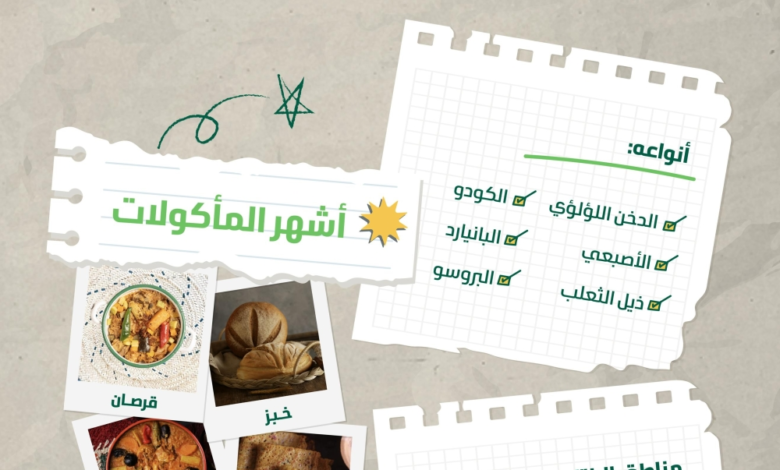
Millet cultivation in the Kingdom is concentrated in several key regions characterized by their fertile agricultural environment: Makkah, Jazan, Asir, Al-Baha, and Madinah. Locally grown millet varieties include pearl millet (the most widespread), finger millet, foxtail millet, and kudu millet, reflecting the Kingdom's rich agricultural biodiversity.
Government support and Vision 2030
In the context of enhancing food security, the millet sector receives generous and continuous support from the Sustainable Rural Agricultural Development Program, "Reef Saudi Arabia." This support aims to empower small farmers, increase productivity, and improve agricultural practices. These efforts are perfectly aligned with the objectives of the Kingdom's Vision 2030, which seeks to achieve self-sufficiency in strategic commodities, reduce reliance on imports, and increase the agricultural sector's contribution to the GDP, thus making millet a strategic option that transcends its status as merely an agricultural crop.
The ministry called on consumers to support the national product by including millet and local grain products in their Ramadan purchases, and using them in preparing popular dishes, baked goods and pastries, stressing that this trend contributes directly to the sustainability of national agriculture and supports the local economy.