Meteorology: -10 degrees Celsius, the lowest temperature in Saudi Arabia in 4 decades

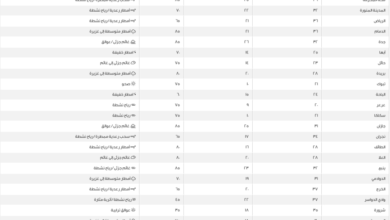
The National Center for Meteorology in the Kingdom of Saudi Arabia issued today, Thursday, a comprehensive statistical report highlighting the historical climate records of the Kingdom, revealing the lowest temperatures and frost cases witnessed in various regions during the winter seasons (December, January, February) over the past four decades, specifically for the period from 1985 to 2025.
Record low temperatures
Documented climate data shows that the city of Hail holds the record for the lowest temperature ever recorded in the Kingdom's modern climate history, with temperatures plummeting to -10 degrees Celsius on January 16, 2008. The winter of 2008 is considered a landmark in Saudi Arabia's climate history, being the harshest and coldest on record for many cities.
In second place was the city of Qurayyat in the Al-Jawf region, which recorded -9 degrees Celsius in the same year (January 2008), while the city of Tarif in the Northern Borders region recorded -8 degrees Celsius in several years. Older records also indicate that the city of Al-Jawf recorded -7 degrees Celsius in February 1989.
The capital, Riyadh, was not spared from these polar waves, with the report revealing a temperature as low as -5.4 degrees Celsius. The list of cities that recorded low temperatures included:
- Arar: -6.3 degrees Celsius.
- Rafha: -5.8 degrees Celsius.
- Buraidah: -5 degrees Celsius.
- Tabuk: -4 degrees Celsius.
- Al-Ahsa: -2.3 degrees Celsius.
Tarif... the frost capital of the Kingdom
In another part of the report, the northern regions topped the list in terms of the number of days of frost. The city of Tarif in the Northern Borders region ranked first, recording 720 days of frost over the past forty years. It was followed by Al-Qurayyat with 588 days, and then Hail with 339 days.
The geographical and climatic context of cold waves
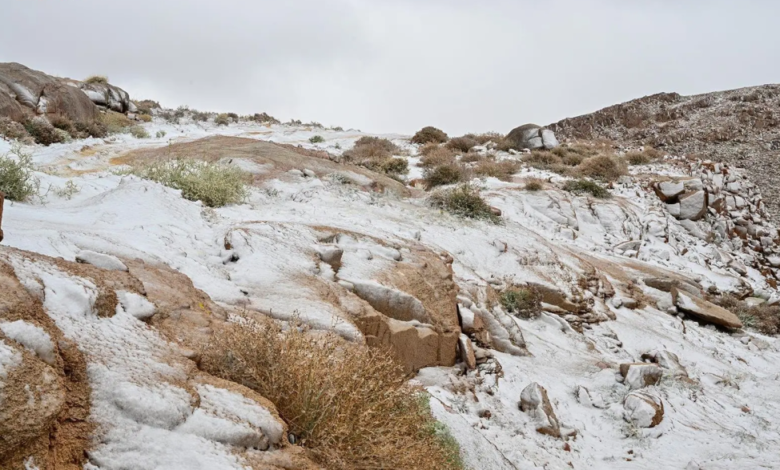
This data is particularly important when considering the Kingdom's geography. Northern regions (such as Tarif, Qurayyat, and Arar) are located at higher latitudes and are directly affected by polar air masses originating from Siberia and Eastern Europe, especially given the absence of topographical barriers that could block these cold winds. As for Hail, its high altitude plays a pivotal role in its record-low temperatures, making it susceptible to severe cold waves and occasional snowfall.
The importance of climate archives for future planning
The importance of this report extends beyond simply recording historical figures; it forms a vital database for strategic sectors in the Kingdom. These long-term records support the agricultural sector in identifying suitable crops and planting seasons to prevent frost damage. The urban planning and energy sectors also rely on them to estimate electricity loads and design buildings in accordance with the updated Saudi Building Code for cold regions.
This release comes as a confirmation of the National Center for Meteorology’s efforts to document climate history and raise community awareness of the Kingdom’s diverse weather characteristics, thus enhancing national readiness to deal with extreme weather phenomena.