World News
Developments in the Iran war: A large fire at an oil refinery in the occupied territories

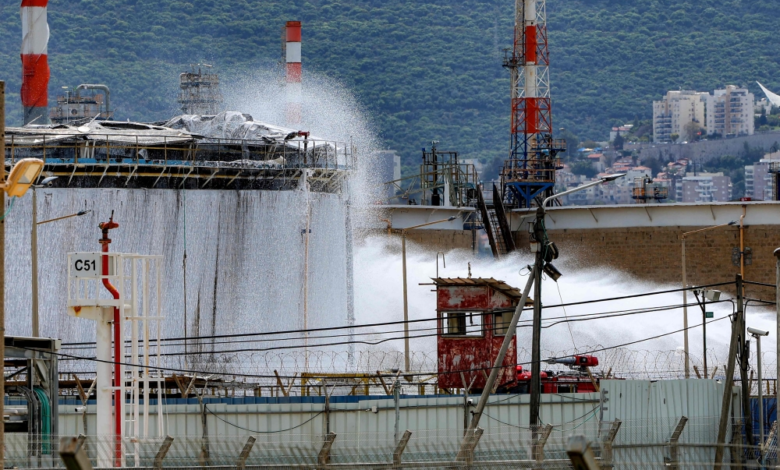
The fire and rescue service of the entity reported Israeli occupation That its crews are working on Extinguishing a fire Large at the oil refinery in HaifaAfter she was hit by shrapnel from an intercepted projectile on Monday.
Television channels showed thick black smoke rising into the sky from the site, while the fire service released pictures of a burning tank.
The service said that "the incident involves a fire in a tank containing three thousand cubic meters of fuel," adding that it is being emptied.
She added that firefighters were working at the site "where debris resulting from an interception operation was observed following the last push," confirming that there were no injuries.
Television channels showed thick black smoke rising into the sky from the site, while the fire service released pictures of a burning tank.
The service said that "the incident involves a fire in a tank containing three thousand cubic meters of fuel," adding that it is being emptied.
She added that firefighters were working at the site "where debris resulting from an interception operation was observed following the last push," confirming that there were no injuries.
Missiles coming from Iran
The incident occurred shortly after the Israeli military announced it had detected new missiles launched from Iran.
Soon after the damage was assessed, AFP footage showed plumes of smoke rising above the circular tanks.
AFP journalists who arrived at the scene about an hour later reported that the smoke had dissipated and firefighters were working to contain the blaze.