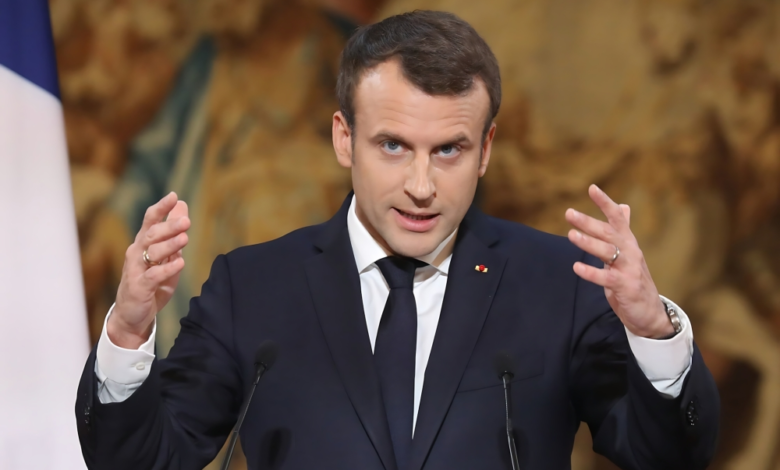

During a cabinet meeting held on Monday, French President Emmanuel Macron reaffirmed his country's official position on the recent developments in Venezuela, stressing that France "neither supports nor approves" of the way the United States of America carried out the arrest of Venezuelan President Nicolas Maduro and his transfer to American soil.
French government spokeswoman Maud Brégon relayed the president's remarks to journalists, explaining that Macron was careful to distinguish between "the method" and "the result." While he criticized the mechanism by which the operation was carried out, he simultaneously considered Maduro a "dictator," describing his departure from power as "good news" for the Venezuelan people who have suffered for many years.
Internal political controversy and pressure from the left
This clarification from the Élysée Palace comes in the wake of a wave of sharp criticism directed at the French president, particularly from leading figures on the French left. Critics had taken issue with Macron's initial silence and his failure to immediately condemn what they considered a violation of diplomatic norms and international law by Washington. Observers believe that Macron's recent statements were an attempt to strike a delicate balance between maintaining strategic relations with the United States and upholding the principles of national sovereignty and international law that France has traditionally defended.
The historical context of the Venezuelan crisis
To understand the dimensions of this situation, one must consider the broader context of the crisis in Venezuela. For years, the country has been gripped by a crippling economic and humanitarian crisis under the rule of Maduro, who succeeded the late Hugo Chávez. Venezuela has experienced hyperinflation and severe shortages of food and medicine, leading to the displacement of millions of Venezuelans to neighboring countries.
Furthermore, the Maduro regime faced increasing international isolation and stringent economic sanctions, particularly from the United States and the European Union, due to accusations of election fraud, repression of political opposition, and human rights abuses. Washington had previously accused Maduro and senior government officials of involvement in "narco-terrorism," which provided the legal justification for the latest US operation.
The repercussions of the operation and its international impact
The removal of Maduro in this manner raises profound legal and political questions on the international stage. On the one hand, Maduro's departure could pave the way for a democratic transition in Venezuela, a prospect hoped for by Western nations, including France. On the other hand, the international community fears that this "American-style" approach could set a precedent allowing major powers to intervene militarily or conduct security operations within sovereign states to effect regime change, potentially destabilizing the world.
Macron’s dual stance reflects European concern about being drawn into fait accompli policies that might be imposed by the great powers, while simultaneously emphasizing the need to support the democratic aspirations of the people, which puts French diplomacy to a difficult test in balancing principles and interests in Latin America.