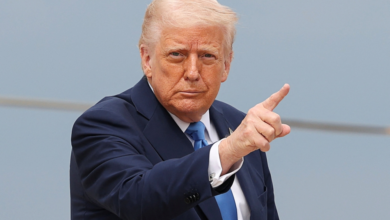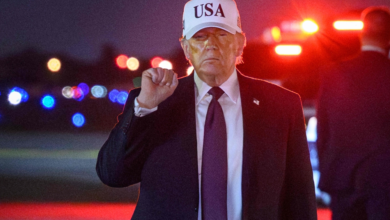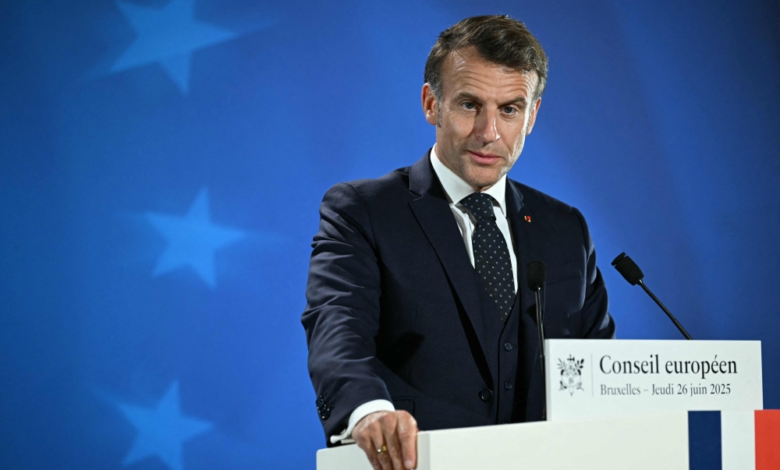

In a new escalation of transatlantic tensions, French President Emmanuel Macron categorically rejected US President Donald Trump's threats to impose punitive tariffs on European countries over the renewed dispute regarding Greenland. Macron asserted that the language of economic threats was "unacceptable," emphasizing that Europe would respond in a unified and coordinated manner to protect its sovereignty and strategic interests.
Background to the crisis: Old ambitions and new maneuvers
The US president's interest in Greenland is not new. In his first term in 2019, Trump sparked global controversy when he proposed buying the self-governing Danish island, an offer that was categorically rejected by Copenhagen and described as "absurd" by the Danish prime minister. This American interest stems from the island's vital geopolitical location in the Arctic, as well as its vast natural resources of rare earth minerals essential for technological and military industries, making it an arena of strategic competition among major powers, including China and Russia.
Current spark: Military exercises in the Arctic
Trump's recent threats came as a direct response to European military deployments in the region, with countries such as France, Germany, Sweden, Norway, the Netherlands, Finland, and the United Kingdom sending troops to Greenland. These forces are participating in a reconnaissance and training mission organized by Denmark in cooperation with NATO. The United States views these deployments as an obstacle to Washington's ambitions to consolidate its unilateral influence on the island, prompting Trump to brandish tariffs as a tool of political pressure.
A firm European stance and a defense of sovereignty
In his firm response via the “X” platform, Macron stated, “Threats of tariffs are unacceptable and have no place in this context.” He added, warning, “If this is confirmed, Europeans will respond in a united and coordinated manner. We will ensure respect for European sovereignty.” The French president linked this stance to his country’s fundamental commitment to the independence of nations, whether in Ukraine or elsewhere, noting that participation in the Greenland exercises stems from a sense of responsibility for the security of the Arctic and Europe’s northern borders.
Potential economic and political repercussions
These threats raise fears of a new trade war between the United States and the European Union at a time when the global economy is clearly fragile. The EU possesses strong trade defense tools that would enable it to impose retaliatory tariffs if Washington follows through on its threats. Sources at the Élysée Palace indicated that Macron is holding urgent consultations with European leaders, particularly those of the countries targeted by the tariffs, to formulate a collective position emphasizing that strategic alliance does not imply subservience and that European security is indivisible.