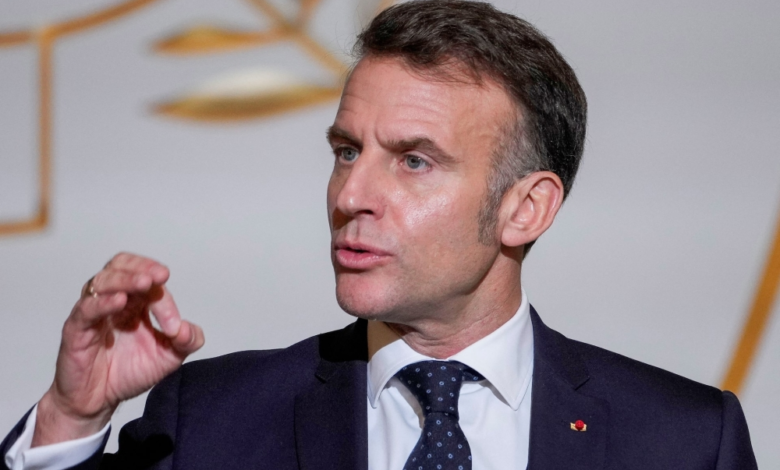
Details of Macron's talks with Trump and Pezeshkian regarding the Iran crisis

Crucial phone calls amid escalating tensions
Amid the rapidly evolving situation in the Middle East, French President Emmanuel Macron intensive telephone conversations with his American counterpart , Donald Trump, and his Iranian , Masoud Pezeshkian . These diplomatic moves come on the eve of Macron's trip to Cyprus, in an attempt to contain the escalating crisis and prevent the region from sliding into a full-blown regional war.
France makes firm demands to halt Iranian escalation
Macron is the first high-ranking Western official to communicate directly with the Iranian president since the latest escalation of the conflict. According to a post on his official X account, the French president delivered a firm message to Tehran, emphasizing the need for an immediate halt to Iranian attacks targeting countries in the region.
French demands were not limited to halting the attacks, but extended to the security of international waterways. Macron called on Iran to guarantee freedom of navigation, specifically by ending any measures to close the Strait of Hormuz . Historically, the Strait of Hormuz is considered one of the world's most strategically important waterways, through which approximately one-fifth of the world's oil production passes. Any disruption to navigation there threatens a severe global energy crisis that would affect the entire international economy.
Macron also expressed his deep concern over Tehran's continued development of its nuclear and ballistic missile programs, considering these destabilizing activities to be the primary cause of the current crisis. It is worth noting that France was one of the key signatories to the 2015 nuclear agreement and has consistently played a mediating role in attempts to revive diplomacy between Tehran and the West.
Trump's statements and the issue of choosing the new Iranian Supreme Leader
On the other hand, in a striking development reflecting the unprecedented level of tension, US President Donald Trump made fiery statements regarding Iran's top leadership structure. In an interview with ABC News, Trump threatened that any new Supreme Leader chosen in Iran must have his personal approval, warning that any new leader "wouldn't last long" without this American consent.
These statements came after reports of moves within Assembly of Experts to choose a successor to Ayatollah Ali Khamenei, following news from sources about his death on the first day of the US-Israeli attack on Iranian territory.
Historical context of the Leadership Expert Council
To understand the significance of this event, one must consider the nature of the political system in Iran. The Supreme Leader is at the apex of power and has the final say in all major national policies, both political and military. Since the establishment of the Islamic Republic in 1979, Iran has had only two Supreme Leaders: the founder of the republic, Imam Khomeini, and Ali Khamenei, who assumed the position in 1989.
The Assembly of Experts, an elected body of 88 clerics, is responsible for selecting the Supreme Leader. Therefore, any change in this sensitive position would have enormous implications for Iran's domestic future and its foreign policy.
Iranian rejection of foreign interference
Tehran was quick to respond to Trump's remarks, with the Iranian leadership categorically rejecting any foreign interference in its sovereign affairs. Iranian Foreign Minister Abbas Araqchi, in comments to NBC News, affirmed that his country would not permit any foreign party to meddle in its internal affairs.
Araghchi stressed that the process of choosing the new leader is a purely internal matter, belonging exclusively to the Iranian people and their constitutional institutions, in reference to the independence of the decision of the Assembly of Experts on Leadership.
Expected impact of current events
These developments have serious repercussions on several levels. Domestically, Iran faces an unprecedented transitional challenge amidst a highly complex security environment. Regionally, these mutual threats increase the likelihood of the conflict escalating, jeopardizing the security of neighboring states. Internationally, diplomatic interventions reflect the international community's fears that the situation could spiral out of control, necessitating intensified efforts to avert a geopolitical and economic catastrophe.