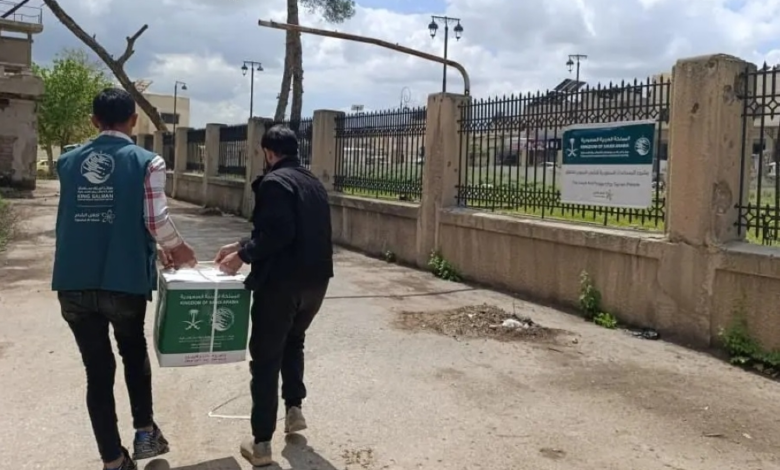

The King Salman Humanitarian Aid and Relief Center continued its tireless efforts to support the Syrian people, distributing 2,181 complete food baskets in Aleppo Governorate, benefiting 2,181 of the most vulnerable and needy families in the region. This initiative is part of a series of relief projects implemented by the Kingdom of Saudi Arabia to alleviate the severity of the humanitarian crisis afflicting the Syrian people.
Background to the humanitarian crisis in Syria
Since the outbreak of the crisis in 2011, Syria has faced one of the greatest humanitarian disasters of modern times. Years of conflict have devastated infrastructure, crippled the economy, and displaced millions of people both internally and externally. Aleppo, once a vibrant economic and cultural center, is among the hardest-hit cities, suffering immense destruction and leaving its residents struggling to secure even the most basic necessities, especially food. The situation was further exacerbated by the devastating earthquake that struck northern Syria in February 2013, deepening the tragedy and pushing the level of need to unprecedented heights.
The importance and impact of food aid
In this difficult reality, providing food aid is a lifeline for affected families. The food baskets distributed by the King Salman Humanitarian Aid and Relief Center are more than just meals; they are a message of hope and support that contributes to strengthening the food security of these families and helps them withstand harsh conditions. Each basket contains essential and varied food items sufficient for a family for a month, ensuring that its members, especially children, women, and the elderly, receive proper nutrition and relieving them of the burden of daily food searches. This direct support enables families to direct their limited resources, if any, towards other urgent needs such as healthcare or education.
The role of the Kingdom and the King Salman Relief Center
This aid is an integral part of the leading humanitarian role played by the Kingdom of Saudi Arabia on the international stage. Since its establishment in 2015, the King Salman Humanitarian Aid and Relief Centre has served as the Kingdom's humanitarian arm, implementing hundreds of projects in dozens of countries around the world without discrimination based on religion or ethnicity. The Centre pays particular attention to the Syrian crisis, providing diverse assistance including food, shelter, health, and education, both to internally displaced persons within Syria and to refugees in neighboring countries. These ongoing efforts reflect the Kingdom's unwavering commitment to the principles of humanitarian action and the values of brotherhood and solidarity with affected peoples worldwide.