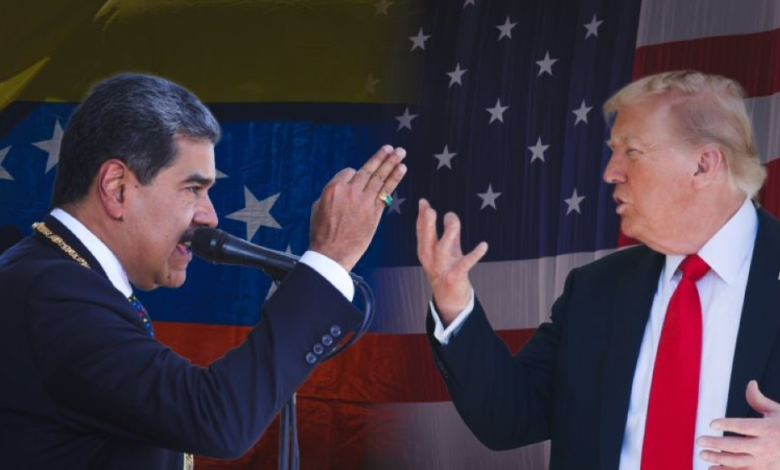
Maduro responds to Trump's call for him to step down: Mind your own business in America

In a new escalation of the ongoing war of words between Caracas and Washington, Venezuelan President Nicolás Maduro sharply criticized his American counterpart, Donald Trump, urging him to focus on domestic US affairs instead of meddling in Venezuela's presidential future. This direct response came after Trump, speaking from his Florida residence, explicitly called on Maduro to step down.
Details of the Venezuelan response
In a televised address on Venezuelan state television, Maduro rejected US interference in his country's affairs, stating that the US president's priority should be addressing the economic and social challenges facing the United States. "It would be better for President Trump to focus on the economic and social issues in his own country and to mind his own business," Maduro said firmly, clearly rejecting any external dictates regarding the Venezuelan government.
Trump and escalating political pressure
On Monday, US President Donald Trump told reporters, in response to a question about whether Washington's strategy aimed to end Maduro's 12-year rule, that the choice remained with the Venezuelan president, but he added that Maduro should step down. Trump said, "It's up to him to decide what he wants to do. I think it would be wise for him to step down." These remarks reflect the continuation of the US policy of exerting maximum diplomatic and political pressure on the Venezuelan regime.
Background of the historical tension between the two countries
This verbal sparring is not an isolated incident, but rather part of a long series of tensions that have plagued US-Venezuelan relations since the rise of the leftist regime. Washington accuses the Maduro regime of undermining democracy and violating human rights, leading it to impose successive rounds of harsh economic sanctions targeting the vital oil sector and prominent government figures. In response, Caracas adopts a rhetoric against what it calls “US imperialism,” accusing Washington of attempting to orchestrate coups and destabilize the country in order to seize control of its vast oil resources.
Regional and international dimensions of the crisis
The current crisis transcends the geographical boundaries of the two countries, becoming a point of sharp international polarization. While the United States leads a coalition of Western and regional states to pressure Maduro, the Venezuelan president enjoys strong support from other international powers such as Russia and China, which vehemently oppose regime change through external pressure. Observers believe that Trump's recent call for his resignation is part of an attempt to reshuffle the cards in Latin America. However, Maduro's grip on power, his reliance on the military establishment, and the support of his international allies make a voluntary resignation unlikely in the foreseeable future, thus foreshadowing a continuation of the political stalemate and the economic crisis plaguing the country.