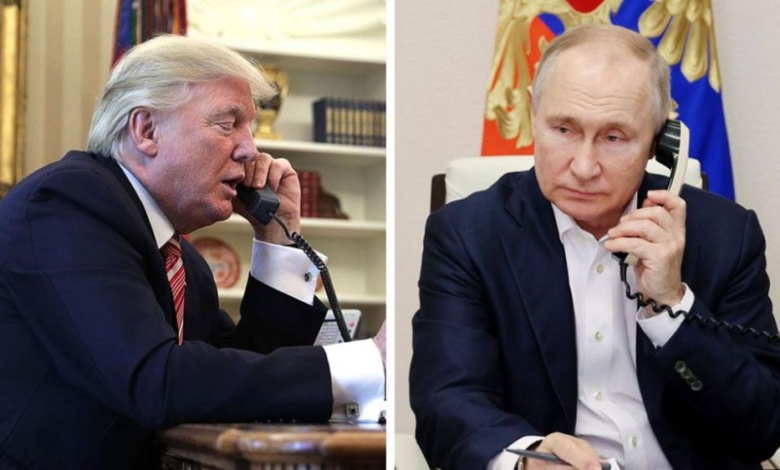

Russian President Vladimir Putin held a telephone conversation with his American counterpart, Donald Trump, during which they discussed the latest developments in the Middle East, a region experiencing escalating tensions. According to Yuri Ushakov, the Kremlin's diplomatic advisor, the talks focused primarily on the Iranian issue and the situation in the Gulf region, reflecting the strategic importance of this area in the calculations of the two global powers.
Tense context and historical background
This contact comes amid a period of heightened tension between the United States and Iran, which escalated after the Trump administration's unilateral withdrawal from the Iran nuclear deal (the Joint Comprehensive Plan of Action, or JCPOA) in 2018. This decision was followed by the imposition of a series of harsh economic sanctions on Tehran as part of what became known as the "maximum pressure" campaign. In contrast, Russia, as a signatory to the agreement, has maintained its support for it and repeatedly called for dialogue and diplomacy as the only way to resolve disputes, thereby reinforcing its role as a potential mediator in international crises. Russian and American interests intersect in a complex manner in the Middle East, particularly in Syria, where Moscow supports the Syrian government while Washington leads an international coalition in the region.
The importance of communication and its potential effects
The significance of this direct dialogue between Putin and Trump lies in its being a vital channel of communication to prevent miscalculations and avert the escalation of regional tensions into a full-scale military confrontation. Regionally, the call sends multiple messages to the countries of the region. For Iran, it may be seen as a glimmer of hope for de-escalation, while the Gulf Arab states are watching cautiously to assess the extent of coordination between the major powers regarding regional security. Internationally, this call underscores that managing major crises still requires dialogue between Moscow and Washington, despite their deep disagreements on other issues. Ushakov noted that President Putin considered Trump's decision to extend the ceasefire with Iran "the right decision," as it opens the door to negotiations and contributes to stabilizing the situation. This highlights Russia's efforts to present itself as a force for stability in the face of policies that could destabilize regional security.