Sales begin for the second phase of Al-Jana destination in Jeddah through the National Housing Company

The National Housing Company (NHC), a leading real estate developer, announced the commencement of sales for the second phase of "Al-Jana Destination" in Jeddah. This step comes in response to the overwhelming demand witnessed in the first phase, following the complete reservation of its units. This reflects the high level of confidence that beneficiaries place in the company's projects and the destination's strategic location, which connects residents to the city's main thoroughfare.
Standard specifications for an integrated residential environment
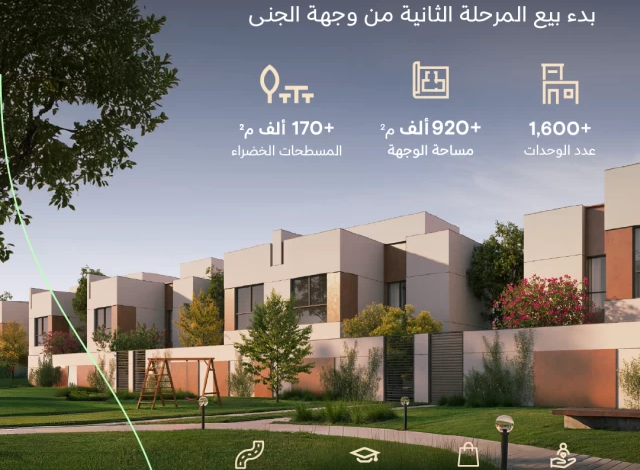
Spanning over 920,000 square meters, "Al Jana Destination" is designed as a model for modern urban communities. It offers more than 1,600 residential units, ranging from villas to townhouses, featuring contemporary designs that prioritize privacy and meet the aspirations of Saudi families. To further enhance the concept of human well-being, the destination incorporates over 170,000 square meters of green spaces and open gardens, providing residents with a natural haven and encouraging sports and social activities in a healthy and safe environment.
Strengthening the goals of the Kingdom's Vision 2030
The launch of the second phase of "Jana Destination" is not limited to being just a real estate project, but represents a part of the comprehensive development movement led by the National Housing Company to achieve the objectives of the Housing Program, one of the programs of the Kingdom's Vision 2030. These projects aim to raise the rate of homeownership for Saudi families to 70% by 2030, by injecting more real estate supply that is characterized by quality and appropriate price, which contributes to the stability of the real estate market and meets the growing demand in major cities such as Jeddah.
Infrastructure and services that support quality of life
Al Jana Destination embodies the comprehensive concept of quality of life, designed as a fully integrated community where residents don't need to leave the premises to meet their daily needs. The destination boasts a complete range of amenities, including schools for boys and girls to ensure a close learning environment, shopping centers for a convenient shopping experience, and carefully planned health centers, mosques, and prayer halls to serve all residential neighborhoods within the destination. This integrated planning reflects NHC's commitment to developing sustainable residential environments that transcend the traditional concept of housing.
Leading position and economic influence
The National Housing Company continues to solidify its position as the largest real estate developer in the Middle East and North Africa region, playing a pivotal role in the Kingdom's urban transformation. Its projects in Jeddah, including "Jana Destination," are a significant contributor to the local economy, creating investment and employment opportunities and supporting the contracting and construction sector. The company invites those interested in owning property and taking advantage of the second phase options to visit its website for details and to reserve their units via the following link: https://nhc.sa/real-estate-development/suburbs/47697/15/