43,000 tons of waste were removed in Mecca during the first 5 days of Ramadan

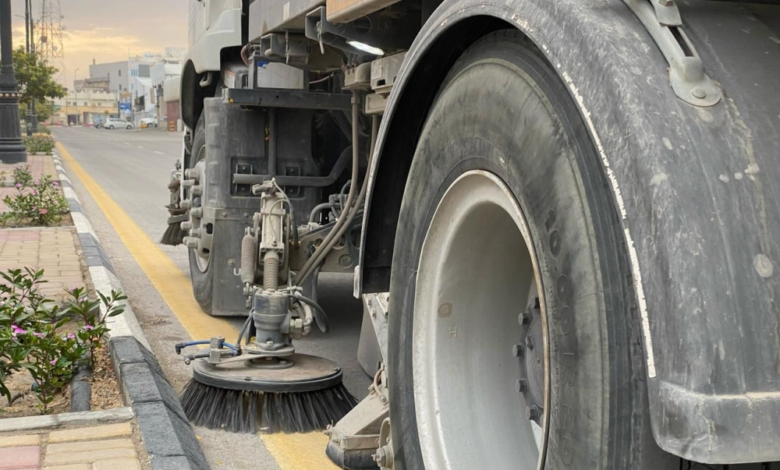
The Holy Capital Municipality revealed that it achieved record numbers in cleaning and environmental treatment operations during the first five days of the holy month of Ramadan in the year 1447 AH, as the field teams succeeded in removing more than 43,000 tons of waste, as part of its intensive operational plan aimed at providing a healthy and safe environment for the guests of God and the residents of the Holy Capital.
Details of field operations and recorded figures
Official statistics revealed that the total amount of waste removed reached 43,571.7 tons, distributed between 19,658.4 tons of municipal solid waste and 23,913.3 tons of construction and demolition debris removed to address visual pollution. These extensive efforts are a response to the high population density experienced in Mecca during this spiritual season.
In a related context, cleaning crews carried out mechanical sweeping operations on streets and squares covering a length exceeding 3,198,466 linear meters, in addition to washing and disinfecting 440 sites of sidewalks and public walkways. The work also included the maintenance of 752 waste containers and the replacement of damaged ones, as well as the washing and sanitizing of 2,905 containers to ensure the absence of odors and insect breeding.
General context: Challenges of managing crowds and waste during seasons
Managing waste in Mecca during peak seasons like Ramadan and Hajj is one of the most complex logistical challenges globally. With millions of pilgrims and worshippers converging on a limited geographical area at the same time, the amount of waste generated daily increases dramatically compared to normal days. The municipality employs proactive strategies, dividing the city into work zones and intensifying shifts around the clock, particularly in the central area surrounding the Grand Mosque, which experiences the highest population density.
Strategic importance and expected impact
The importance of these works is not limited to the service aspect alone, but extends to include extremely important health, environmental and cultural dimensions:
- At the local level: The immediate removal of waste helps prevent its accumulation, which could lead to environmental and health hazards, thus ensuring the safety of residents and visitors.
- Improving the urban landscape: The municipality is focusing on removing construction and demolition waste as part of initiatives to address visual pollution, which is in line with the goals of the Kingdom’s Vision 2030 and the Quality of Life Program.
- Global mental image: The cleanliness of the Holy City reflects the ability and efficiency of the Kingdom of Saudi Arabia in managing major cities and huge religious seasons, leaving a positive impression on pilgrims coming from different countries around the world.
The Holy Capital Municipality confirmed that its work will continue at the same escalating pace throughout the days of the holy month, calling on everyone to cooperate by committing to placing waste in the places designated for it, to ensure the sustainability of cleanliness and the improvement of the general scene in the purest of places.